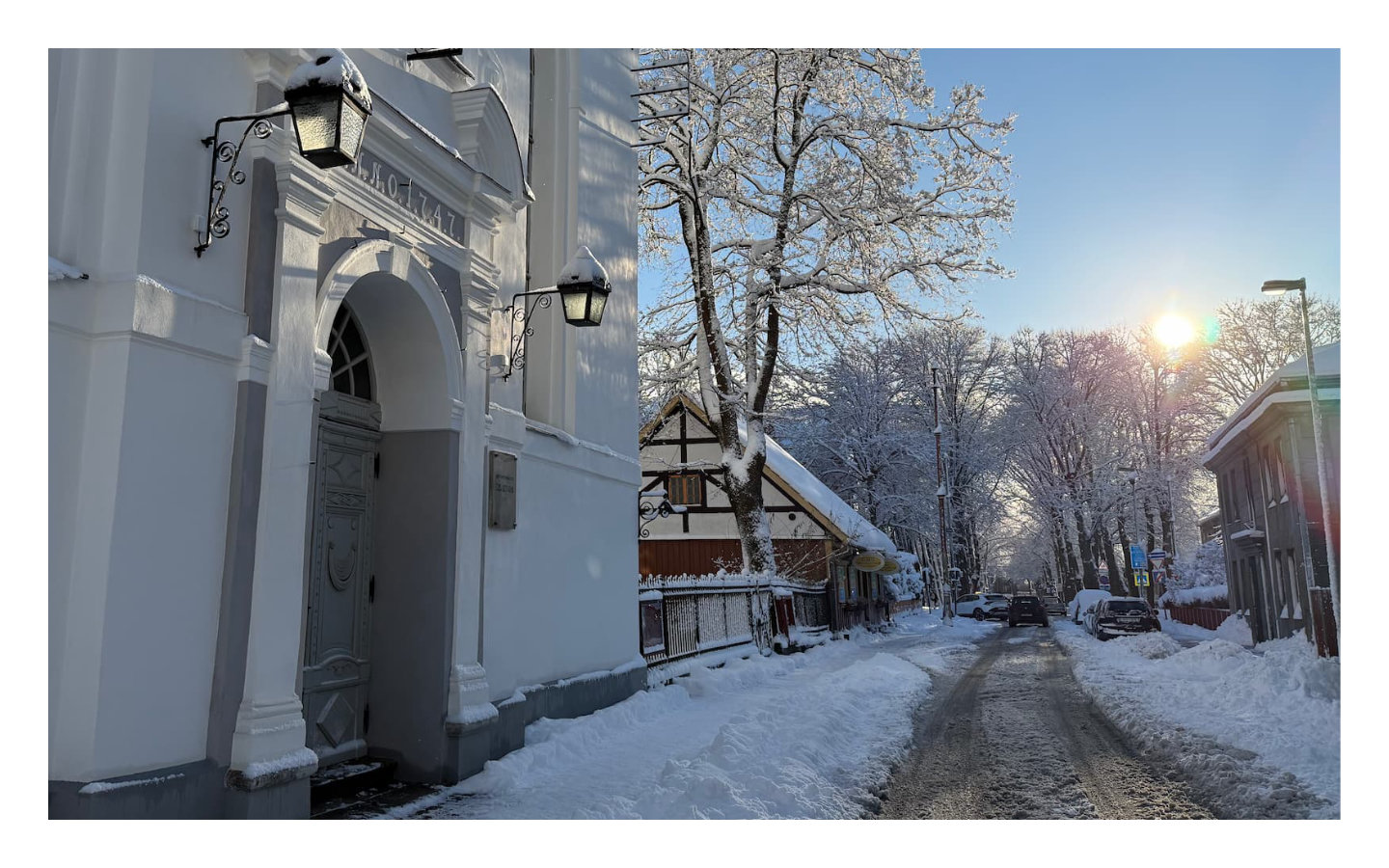
Pärnu St Elizabeth’s Parish takes its name from St Elizabeth’s Church, consecrated in 1750 and built for the Estonian residents of Pärnu.
An Estonian-speaking congregation emerged in Pärnu in the 16th century. Although it is not known exactly when the Estonians first received their own pastor, a record from 1584 notes that sermons were also preached in Estonian in Pärnu. Laurentius Jacobi, the first known pastor of the Estonian congregation, was appointed in 1599. St John’s Church was consecrated for the congregation in 1609.
In 1714, however, the authorities took St John’s Church from the Estonian congregation and converted it into a Russian garrison church. The Estonians then shared St Nicholas’ Church with the German congregation until Empress Elizabeth of Russia ordered a new church to be built for the Estonians of Pärnu, allocating 8,000 roubles from the state treasury for the purpose.
The foundation stone was laid on 25 June 1744. The exterior was completed by 27 March 1747, and the church was consecrated on 29 March 1750. It was dedicated to St Elizabeth, probably in gratitude to Empress Elizabeth, and the former St John’s congregation, which had found a new home there, also came to bear this name.
The patron saints honoured by Pärnu St Elizabeth’s Parish are St Elizabeth of Hungary, who lived in the 13th century; the righteous Elizabeth of the New Testament, mother of St John the Baptist; St John the Apostle and Evangelist; and St Nicholas, the 4th-century Bishop of Myra, after whom Pärnu’s now-lost medieval town church was named.
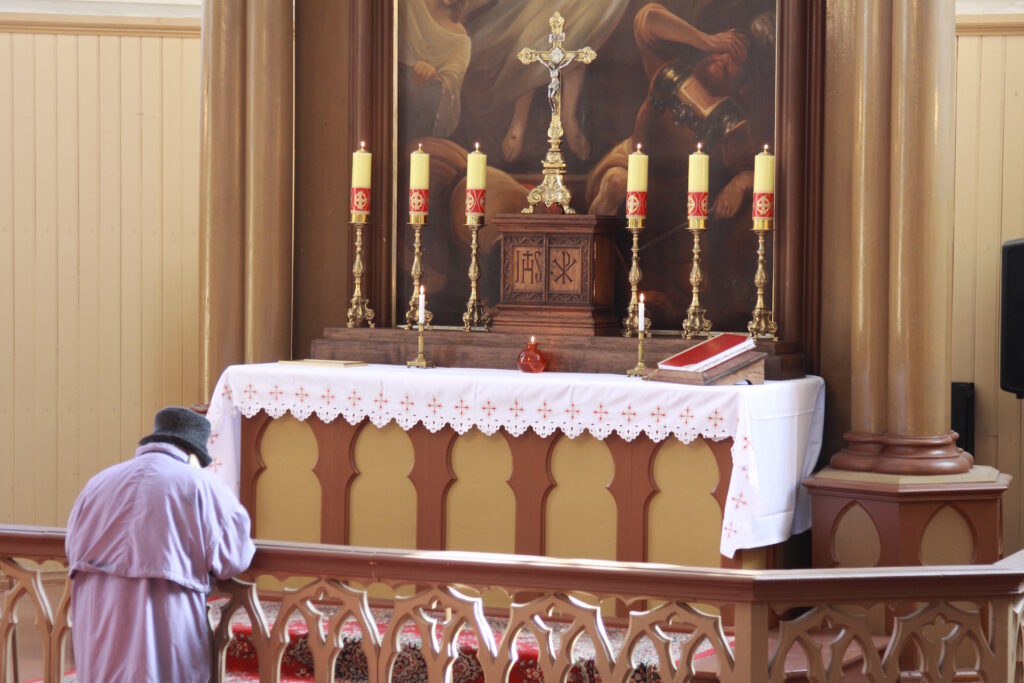
Today Pärnu St Elizabeth’s Parish has about 6,500 baptised members. Worship services are held regularly on Sundays and weekdays. The parish also offers ministry among children, supports two choirs and carries out many other forms of parish work.
At the heart of the life of Pärnu St Elizabeth’s Parish is the proclamation of the Good News of Jesus Christ, the only-begotten Son of God, who became human and came among us to save us through His holy life, suffering, death on the Cross and Resurrection from bondage to sin, death and evil, making us children of God and heirs to the hope of eternal life: “For God so loved the world that He gave His only-begotten Son, that whoever believes in Him should not perish but have eternal life.”
To become a member of the parish, a person must be baptised. Baptism may take place in childhood, at the request of the parents, or in adulthood. Adult baptism is preceded by a period of preparation known as confirmation instruction or the catechumenate and is accompanied by confirmation, the strengthening gift of the Holy Spirit. Those baptised as children should also attend confirmation instruction when they reach adulthood, so that they may be confirmed and become communicant members of the parish. This enables them, among other things, to have their children baptised, to marry in church and to serve as godparents.
If you wish to join the parish or arrange the baptism of a child, please contact the parish office or one of the pastors.
Living as a faithful Christian and an active member of the parish requires personal faith and commitment, expressed in regular prayer, reading Holy Scripture and serving our neighbours, as well as participation at least every Sunday in the worship and sacramental life of the Church, above all in confession and Holy Communion.
See also the history of St Nicholas’ Parish in Pärnu and its clergy.