Contents
- Two towns, two churches: the Catholic era (13th–16th centuries)
- The Reformation: Pärnu becomes Lutheran (16th century)
- St John’s Parish, the mother of St Elizabeth’s Parish (1609–1714)
- A gift from the Empress: the birth of St Elizabeth’s Church (1744–1750)
- Growth and trials (19th–20th centuries)
- St Elizabeth’s Church today
- Parish Clergy
- Important dates
The story of Pärnu’s churches from the Middle Ages to the present
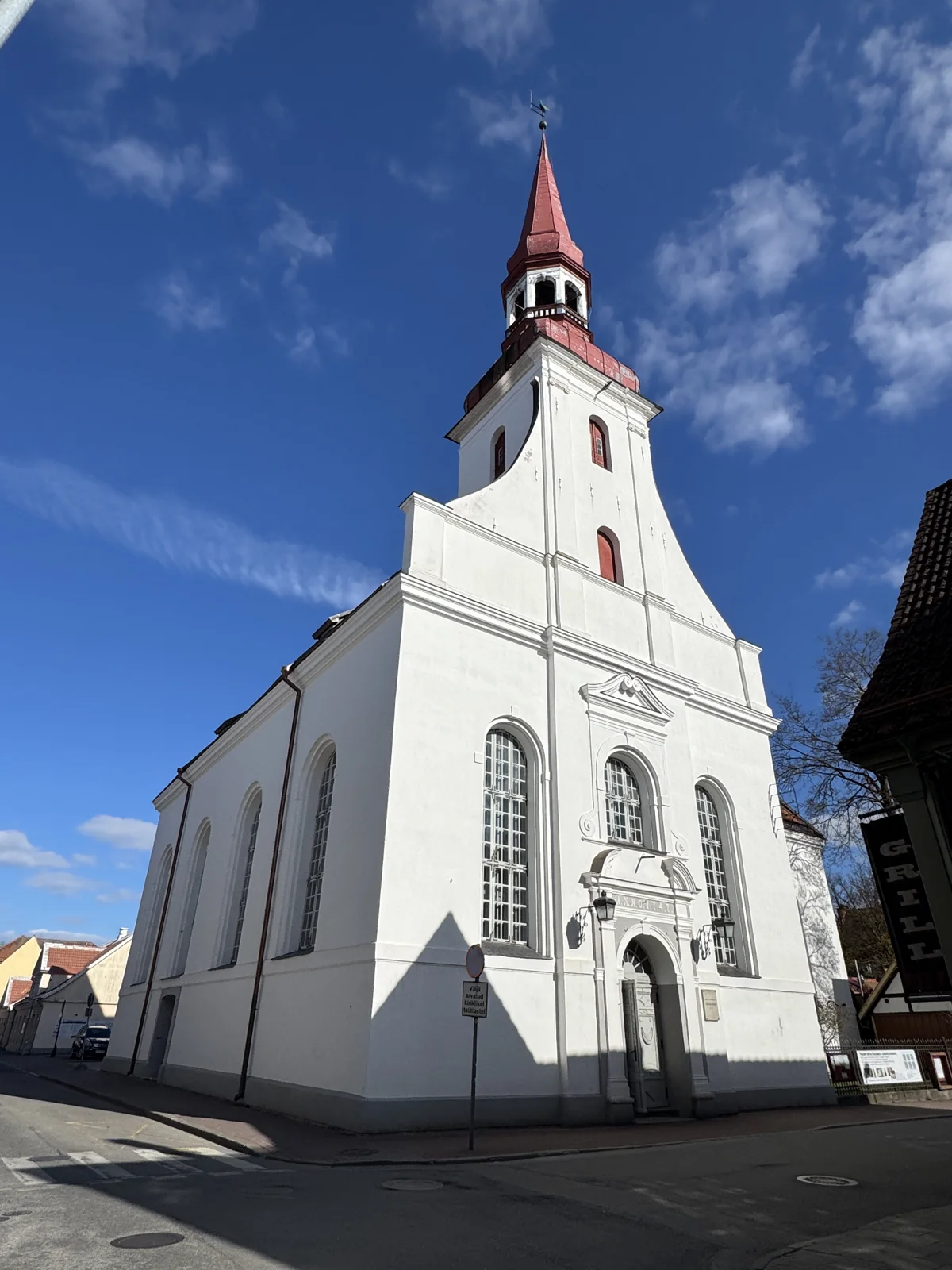
Pärnu St Elizabeth’s Church is one of Estonia’s finest examples of a pure Baroque church and has been the spiritual home of Estonian-speaking people in Pärnu for more than 275 years. Its story, however, begins not in the eighteenth century but in the Middle Ages, and is inseparable from the story of Pärnu itself.
Two towns, two churches: the Catholic era (13th–16th centuries)
Christianity reached Estonia with the crusaders at the beginning of the thirteenth century. It was a violent age, but Estonia thereby became part of Western Christendom—then the Catholic Church centred on the pope in Rome. For about three centuries church life here was Catholic: worship was in Latin, saints were honoured and pilgrimages were made.
Medieval Pärnu consisted of two towns divided by the river. Old Pärnu on the right bank belonged to the Bishopric of Saare-Lääne. A cathedral was built there in 1251–1263, and Pärnu briefly served as the centre of the bishopric. The cathedral was destroyed in a Lithuanian raid in 1263.
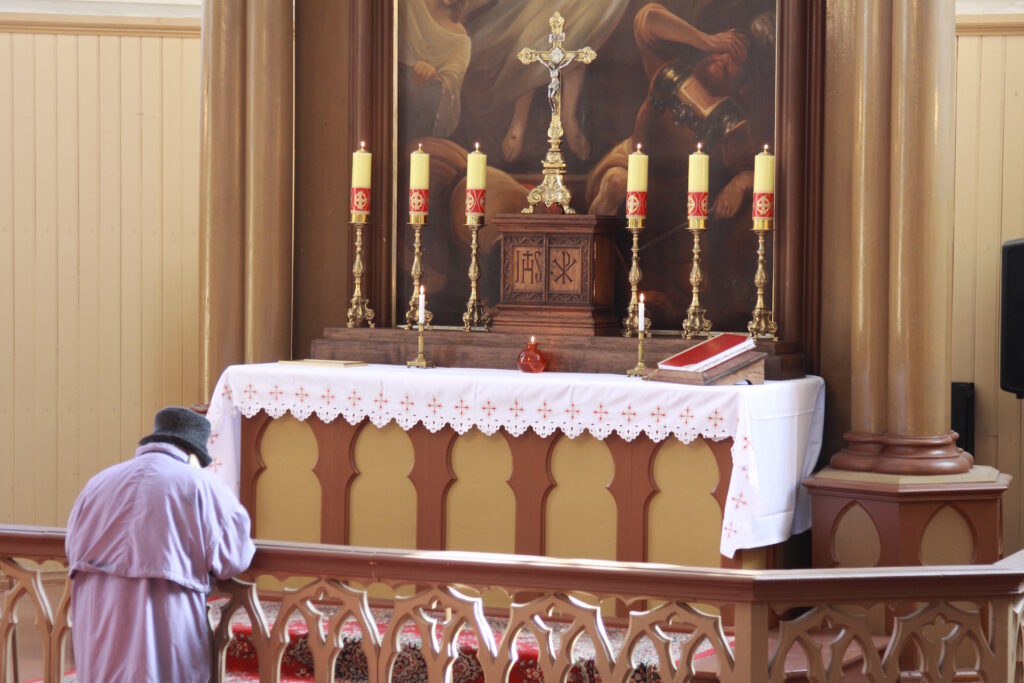
A charred wooden altar cross rescued from the fire became known as the Black Cross and drew pilgrims from far and near. It still appears in Pärnu’s coat of arms. A stylised copy stands beside the sanctuary of St Elizabeth’s Church, where visitors may light a prayer candle.
New Pärnu grew on the left bank, in today’s Old Town. It belonged to the Teutonic Order and became a Hanseatic town. Its principal church was St Nicholas’s, a large red-brick Gothic church built in the thirteenth and fourteenth centuries near the present Town Hall. For centuries it was Pärnu’s most important building and housed the Black Cross. St Elizabeth’s Church still stands at 22 Nikolai Street.
The Reformation: Pärnu becomes Lutheran (16th century)
In 1517 the monk and professor of theology Martin Luther began the reform movement known as the Reformation. He taught that people are made righteous before God not by their achievements but by faith alone, and that God’s Word in the Bible, rather than church hierarchy, is the final authority in matters of faith.
These ideas reached Livonian towns, including Pärnu, in the 1520s. Pärnu’s parishes became Lutheran and have remained so. Worship began to be celebrated in the language of the people; preaching and the explanation of Scripture gained prominence; and ordinary Estonian-speaking people were taught to read so that they could understand God’s Word. The roots of Estonian-language education and literature therefore lie in the Reformation.
The first record of preaching in Estonian in Pärnu dates from 1584. In 1599 Laurentius Jacobi was appointed the first known pastor of the Estonian parish.
St John’s Parish, the mother of St Elizabeth’s Parish (1609–1714)
The direct predecessor of St Elizabeth’s Parish was the Estonian parish that received St John’s Church in 1609. It stood near the present junction of Hommiku and Põhja streets. The building has long disappeared, but Estonians later erected a cross on the site, which became known as the “Swedish Grave”.
After Russian rule replaced Swedish rule during the Great Northern War, St John’s Church was taken from the Estonian parish in 1714 and given to the Russian imperial garrison. Many Finns served in the garrison and worshipped there, so it was also popularly called the Finnish Church. The parish’s close ties with Finnish congregations thus have deep historical roots.
For the next 37 years the homeless Estonian parish shared the German Lutheran St Nicholas’s Church. Two parishes under one roof, each with its own service times, was inconvenient for both.
A gift from the Empress: the birth of St Elizabeth’s Church (1744–1750)
In 1742 Empress Elizabeth of Russia, daughter of Peter the Great, ordered a new Lutheran church to be built for Pärnu’s Estonian parish and granted 8,000 roubles from the imperial treasury. The foundation stone was laid on 25 June 1744, the exterior was completed in 1747, and the church was consecrated on 29 March 1750.
The name unites three Elizabeths. It commemorates the empress, but the church was dedicated chiefly in honour of the biblical Elizabeth, mother of John the Baptist—a fitting name for the new home of the former St John’s Parish. St Elizabeth of Thuringia, a thirteenth-century princess who gave her wealth to the poor and sick, is also honoured as a patron saint.
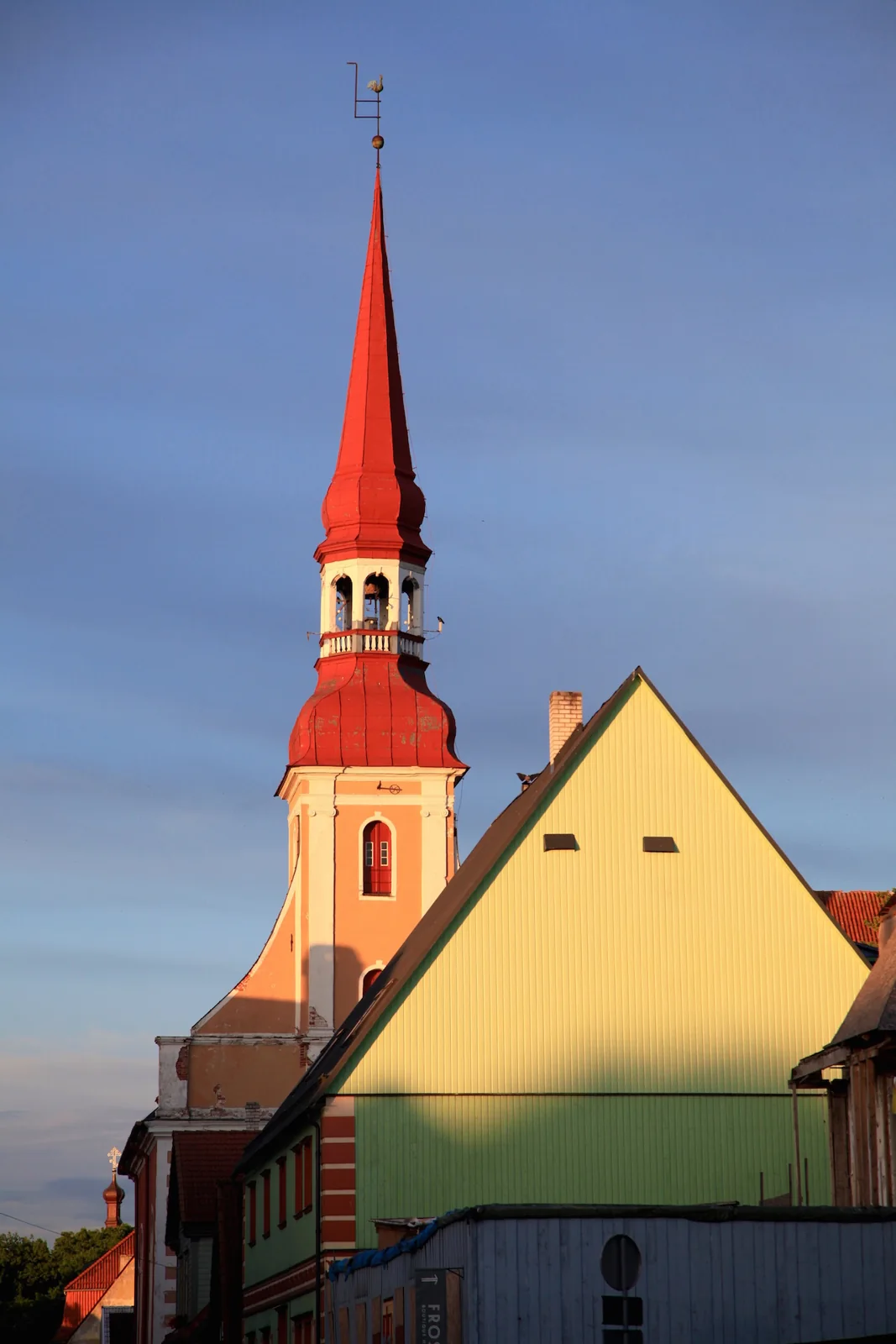
Joachim Hinrick Güterbrock of Riga directed construction, and Johann Heinrich Wülbern, master builder of the tower of St Peter’s Church in Riga, made the spire. The cockerel and golden sphere have crowned it since 1747. The church is among Estonia’s purest Baroque churches. The older portion is built of fieldstone, the later extension of brick, and the whole exterior is plastered.
Growth and trials (19th–20th centuries)
In 1850 the church received a new altar and pulpit. By the end of the nineteenth century the parish had outgrown the building, and in 1893 a southern transept and galleries were completed. The enlarged “new church” was consecrated on 19 October 1893. The temperance society Valgus helped fund the work; today Alcoholics Anonymous groups meet at the church, continuing the struggle against addiction.
St Elizabeth’s Church was badly damaged in a bombing raid in July 1941 but was restored. St Nicholas’s Church was destroyed in September 1944, and Soviet authorities demolished its ruins in the 1950s. St Elizabeth’s Parish thus became the legal successor of both the historic St John’s and St Nicholas’s parishes.
Under Soviet rule religious instruction was forbidden and church attendance could cost a person their work or education, yet worship at St Elizabeth’s never ceased. After Estonia regained independence, parish life revived. The roof was renewed in 1991, the church repainted in 1992, a parish house built in 1993–1995, and the nave renovated in 1994–1995.
The Soviet years also brought the church unexpected co-tenants. In 1982, at the wish of the city authorities, the re-established Pentecostal congregation began meeting in the confirmation hall at the end of the side aisle, with Anne Kontus as its pastor. For about a decade the two congregations shared the building, until the parish’s expanding work and overlapping meeting times began to cause friction.
Andres Põder, a former pastor of the parish, has recalled: “In the early nineties, when our work expanded and we needed more space, their activity also intensified, and their meetings, which often took place during our services, became rather loud and disturbing. We were obliged to ask them to leave.
On 5 April 1992, however, the first Mass of the re-established Catholic congregation was celebrated in the same room, with Rein Õunapuu as priest.”
The Catholic services were held once a month at first, then twice a month, and finally every Sunday at 4 p.m. In 1995 the Catholic congregation moved to the house returned to it on Karuselli Street. For a short time, then, St Elizabeth’s Church was also the home church of Pärnu’s re-established Pentecostal and Catholic congregations.
St Elizabeth’s Church today
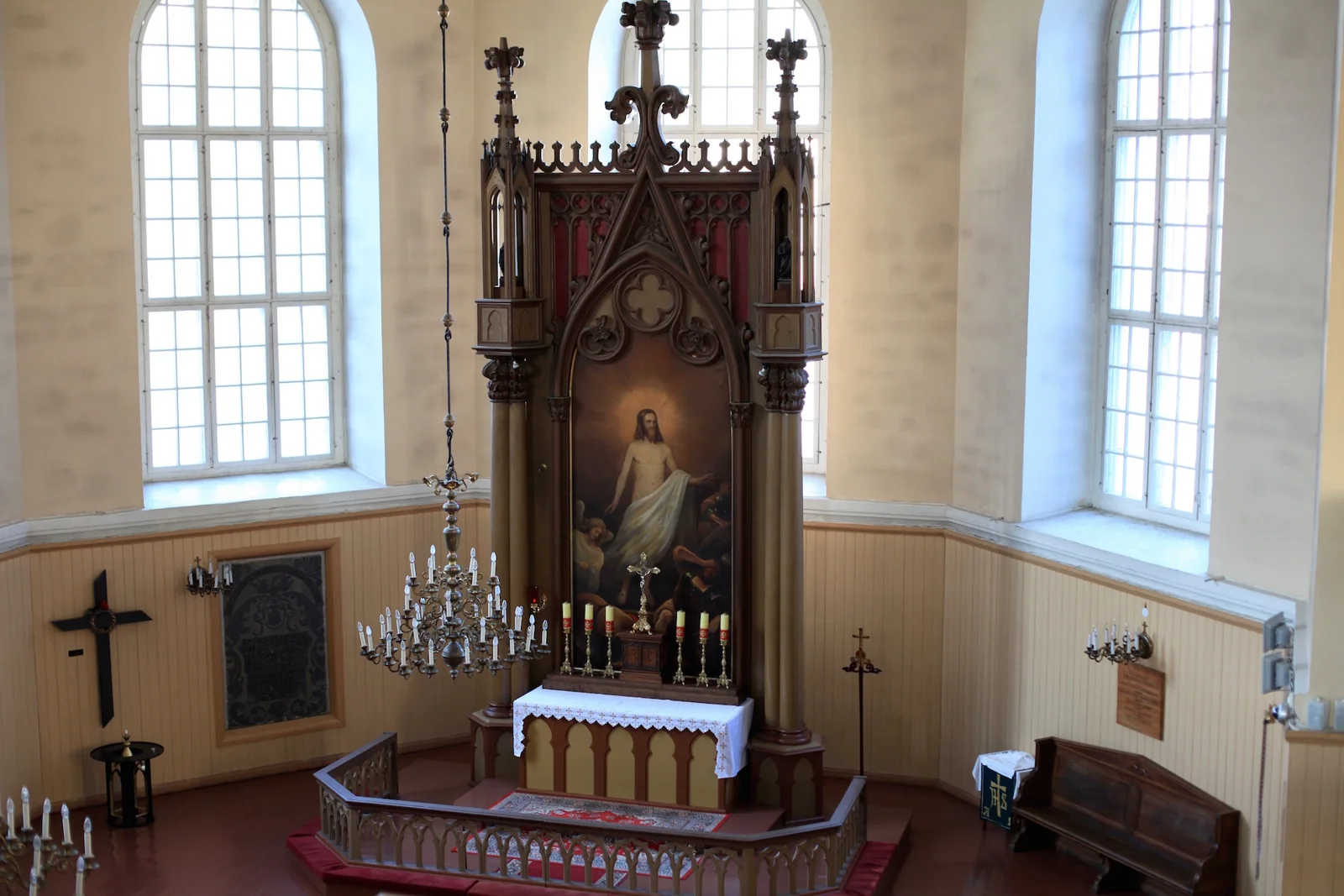
The parish has about 6,500 baptised members. The church is an important centre of music, hosting the international Pärnu Organ Festival, the Summer Aria concert series and the year-round Musica Sacra series. Pärnu schools hold Christmas concerts here, and Mass is celebrated in Finnish at least once a month.
The church is open to everyone—for silence and prayer, to light a candle, hear a concert or attend worship. Services are held every Sunday at 10:00 and Wednesday at 18:00. Everyone is welcome, including those who simply wish to look and listen.
To learn about the altar, pulpit, font, Paschal candle and other features, see What is in a church, and why?
The clergy who have served St Elizabeth’s Parish from the end of the sixteenth century to the present day are described on the page Parish Clergy.
Important dates
- 1251–1263 – Old Pärnu Cathedral; destroyed in a Lithuanian raid; the Black Cross survives.
- 13th–14th centuries – St Nicholas’s Church in New Pärnu (destroyed 1944; ruins demolished in the 1950s).
- 1520s – the Reformation reaches Pärnu.
- 1584 – first record of an Estonian-language sermon in Pärnu.
- 1599 – Laurentius Jacobi, first known pastor of the Estonian parish.
- 1609 – St John’s Church consecrated for the Estonian parish.
- 1714 – St John’s Church given to the garrison; the parish worships at St Nicholas’s for 37 years.
- 1742 – Empress Elizabeth grants 8,000 roubles for a new church.
- 25 June 1744 – foundation stone; 1747 – exterior completed and cockerel placed on the tower.
- 29 March 1750 – St Elizabeth’s Church consecrated.
- 1757 – Pastor W. G. Wagner buried beneath the altar; 1759 – parsonage completed.
- 1825 and 1861 – church bells cast.
- 1845 – first organ, built by C. G. Thal of Paide.
- 1850 – new altar and pulpit.
- 1854 – altar painting The Resurrection, Van der Kaat workshop, Rotterdam.
- 1893 – southern transept and galleries; enlarged church consecrated on 19 October.
- 1909 – tower repairs and electric lighting.
- 1937–1938 – major renovation.
- July 1941 – bomb damage; 1944 – St Nicholas’s Church destroyed.
- 1953 – the confirmation hall is completed at the end of the side aisle.
- 1971 – the church is given gas heating.
- 1982 – the re-established Pentecostal congregation begins meeting in the confirmation hall.
- 1991 – the roof is replaced.
- 5 April 1992 – the first Mass of the re-established Catholic congregation is celebrated in the confirmation hall.
- 1992 – the church is repainted.
- 1993–1995 – a parish house is built beside the church.
- 1994–1995 – the nave is renovated.
- 1995 – the Catholic congregation moves to the house returned to it on Karuselli Street.
- 2001 – restoration of the 1928 organ.
- 2007 – stained-glass window; 2010 – Kriisa organ in the south transept, case designed by Rait Prääts.
See also the history of St Nicholas’ Parish in Pärnu and its clergy.