The Church accompanies us throughout life, from birth to death—in times of joy and in times of trial.
Baptism
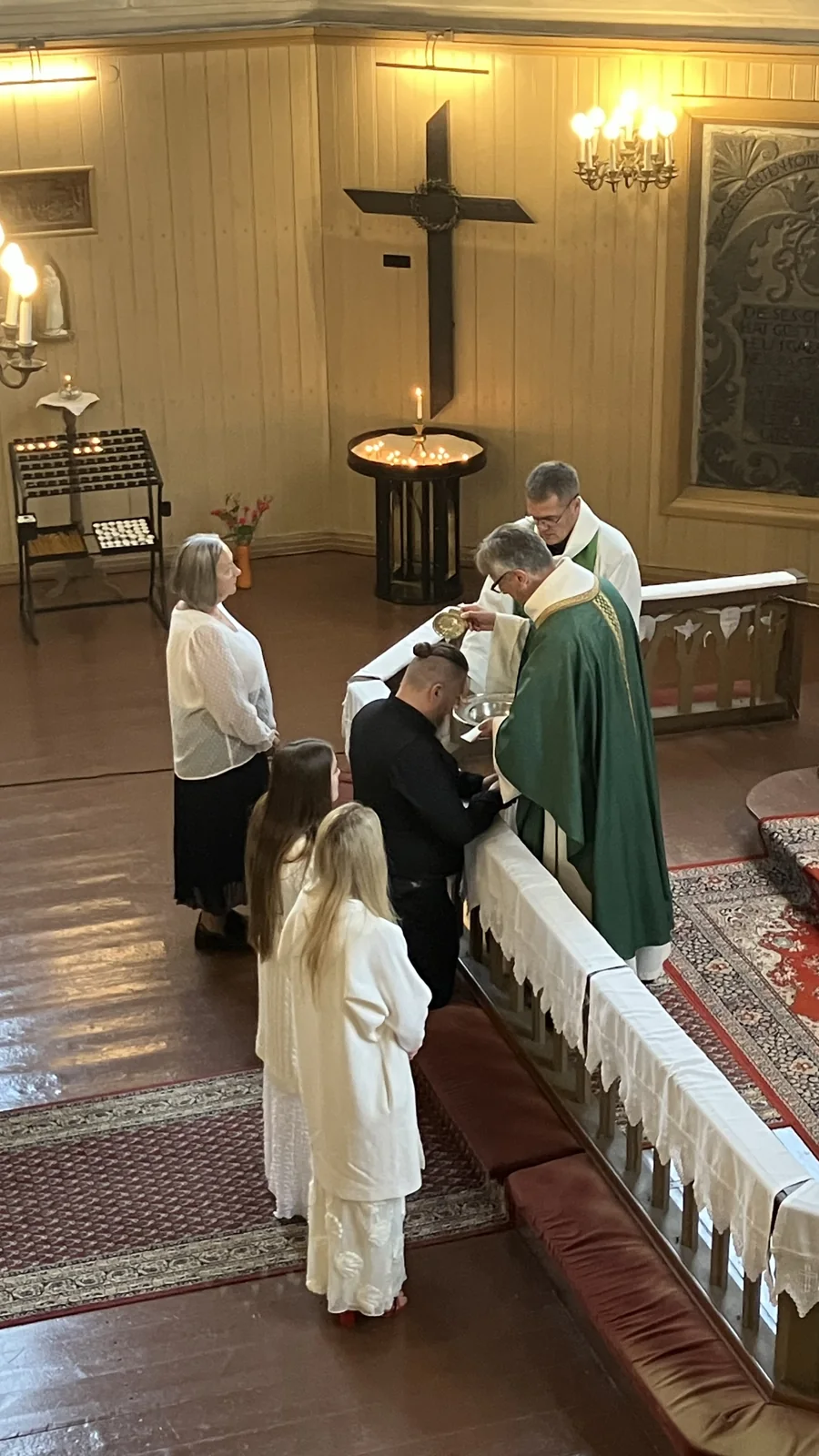
Baptism is the sacrament through which God gives a person new birth to eternal life and makes them a child of God and a member of the Church. Every baptised person shares in Christ’s priestly, royal and prophetic calling.
Its gifts include justification, deliverance from condemnation, sanctifying grace and the fruits of the Holy Spirit. Baptism places an indelible seal upon the soul and is therefore received only once.
In ordinary circumstances Baptism is administered by a bishop, priest or deacon; in extreme necessity any Christian, or even an unbaptised person intending to do what the Church does, may baptise.
It is good for a person to be baptised in infancy, because every human being bears original sin, which Baptism washes away. Anyone not baptised as a child may be baptised as an adult.
Confession and repentance
Through the sacrament of confession and repentance, sins committed after Baptism are forgiven according to Christ’s promise, and the penitent is reconciled with God and the Church.
A bishop or priest may hear confession. Every baptised person capable of distinguishing good from evil may receive the sacrament.
Preparation includes examination of conscience, recognition and contrition for sin, a purpose of amendment, honest confession to the minister, receiving absolution in sincere faith and performing the assigned act of penance.
Holy Communion
Holy Communion is participation in Christ’s sacrifice on the cross and the sacramental reception of his Body and Blood under the forms of bread and wine.
It is the central sacrament because in it we receive the giver of grace himself: God’s only-begotten Son, our Saviour Jesus Christ. His presence is real, not merely symbolic; the whole Christ—Body, Blood, soul and divinity—is present in every part of the consecrated gifts.
The Eucharist is consecrated by a bishop or priest. Its gifts are eternal life, sanctifying and forgiving grace, strengthening of the soul’s supernatural life and union with Christ and, through him, with God.
Holy Communion makes present Christ’s once-for-all sacrifice. In its celebration we stand as it were at the foot of the cross of the one who suffered and died to save us from sin, death and evil. It is therefore also our sacrifice of praise and thanksgiving to the God who gave his Son for us.
Confirmation
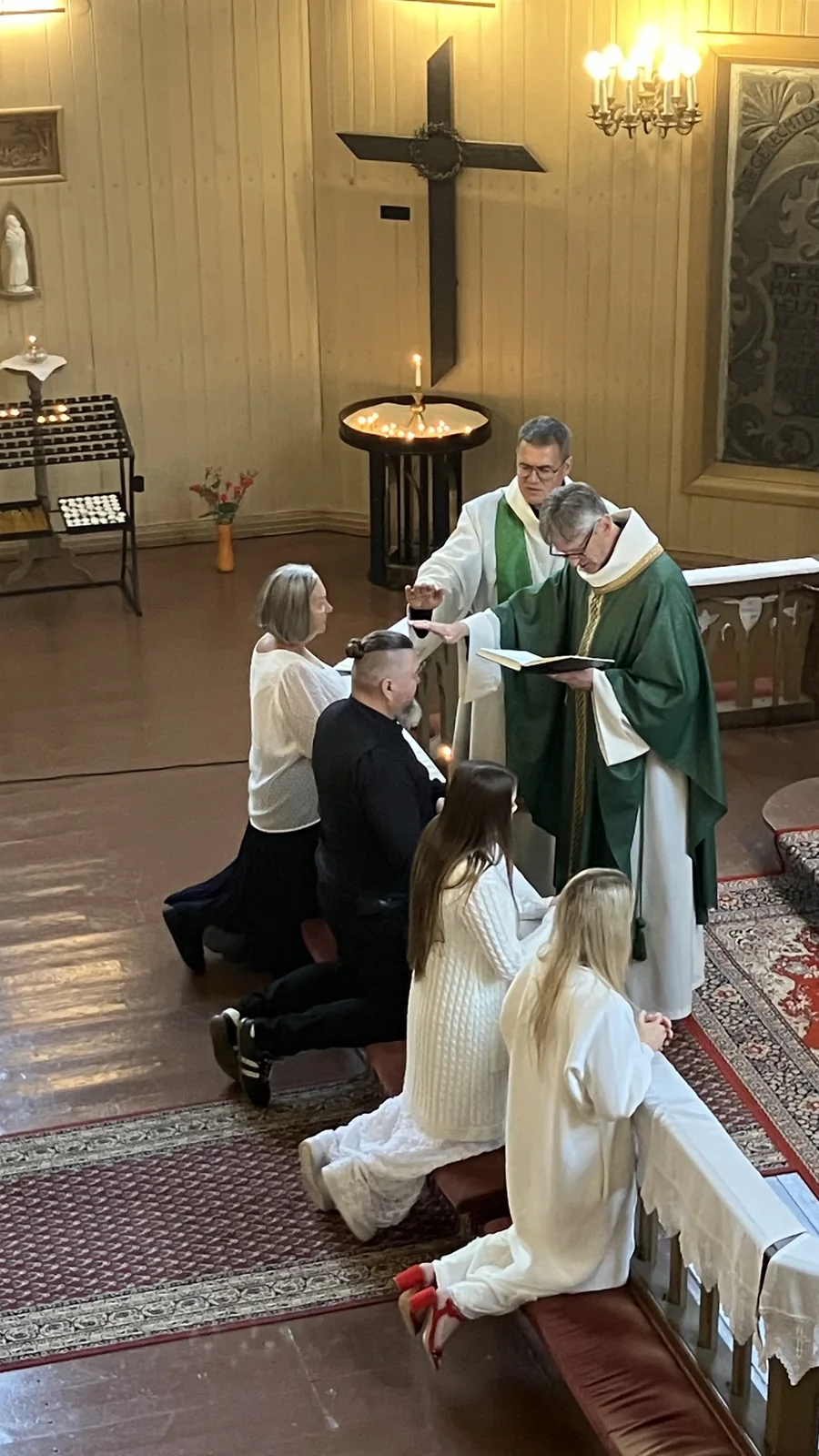
Confirmation is the rite through which God strengthens the baptised person with the gift of the Holy Spirit to bear witness to Christ and keep his commandments. It is preceded by instruction in the faith.
A bishop or priest confirms through the laying on of hands and prayer.
Marriage and church wedding
God created humanity male and female and instituted marriage as an enduring bond of love, pointing to the covenant of love between God and humanity.
Christian marriage rests upon the irrevocable promises the spouses make to one another and is confirmed by a minister in the church wedding rite with the authority given by God and the Church.
Marriage is ordered towards mutual love and the continuation of life through the gift of children. Christian marriage is, as a rule, lifelong and indissoluble.
Anointing of the sick
In the anointing of the sick, God’s grace is given to a sick or dying person through blessed oil and the prayers of the minister; where it serves the person’s salvation, bodily health may also be restored.
The rite prepares a person for death, eternity and appearing before God. God awakens trust in his grace and mercy, strengthens the person against temptation and helps them bear illness and the hardships of life with courage.
Christian funeral
A funeral is a Christian work of mercy and a service of blessing and intercession for Christians called from this life into eternity.
The rite cannot in itself guarantee eternal salvation, but it allows the Church to pray for the departed and encourages the living to remember them in prayer and to order their own lives according to God’s will.
Blessings and dedications
Everyone may turn to a minister and the Church in every circumstance of life to ask for intercession, support and blessing. Where appropriate, a particular rite of blessing or dedication may be celebrated, such as the blessing of a home.
To arrange a church rite, please contact the parish office.