
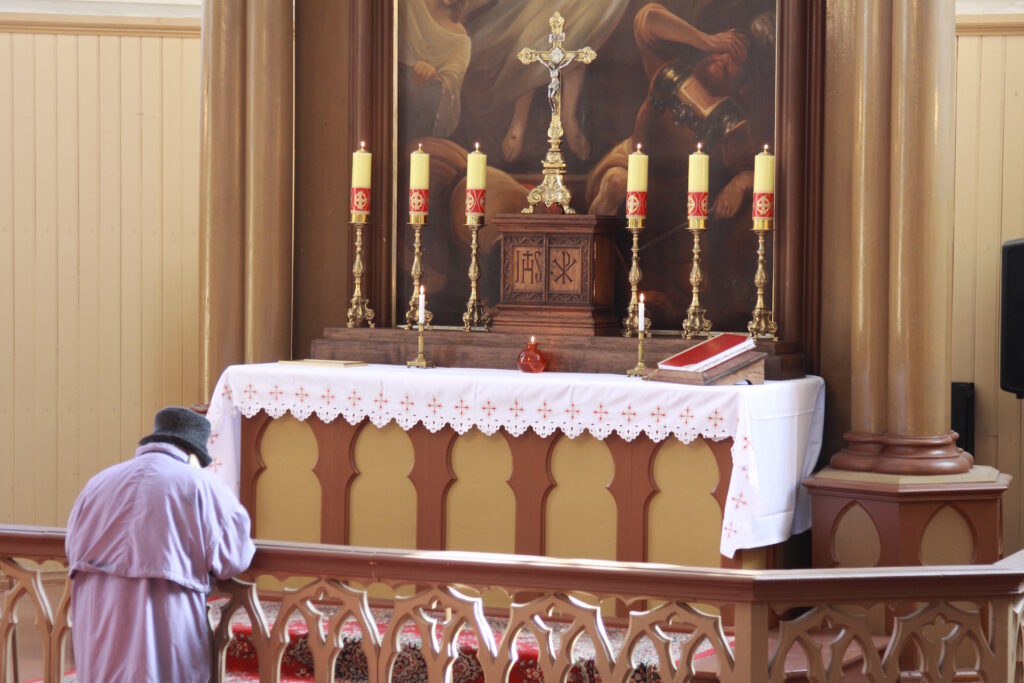
Four centuries of shepherds
The line of clergy of Pärnu St Elizabeth’s Parish reaches back to the end of the sixteenth century. The first pastor of the Estonian parish known by name took office at a time when Pärnu had neither St Elizabeth’s Church nor even St John’s Church — and from then until today some thirty shepherds have stood before the congregation.
Among them are founders of the Estonian written language and of Estonian schools, deans, a general superintendent and an archbishop, but also men of whom history has preserved little more than a name. Some served the parish for decades, others only for a few months. They lived under Polish, Swedish and Russian rule, in the Republic of Estonia, through war, deportations and prison camps, and in a restored Estonia — and through each of them the word of God has been carried onward in Pärnu.
This page gives a short account of the life and ministry of each of them. The story of the parish and its church can be found on the page “St Elizabeth’s Church in Pärnu”.
A note on years of service. In 1924 the large parish was divided into two pastoral districts, each with its own pastor; in 1935 these became separate parishes, St Elizabeth’s First and Second Parish, and in 1940 the Second Parish was renamed Pärnu Niguliste Parish. During the Soviet period, too, the parish was often served by two clergymen at once — which is why some of the terms of office below overlap.
For the earlier period the sources disagree with one another. The two principal ones are “The History of St Elizabeth’s Church in Pärnu”, published in 1898 by the parish’s own pastor Johannes Hasselblatt and based on church and town-court records, and the more recent list of pastors resting on Die evangelischen Prediger Livlands bis 1918, which this page follows. Wherever the sources give different years, the difference is set out at the end of the section, so that the reader can see which figure rests on which source.
Contents
The Polish and Swedish era
- 1593–1601 Laurentius Jacobi
- …–1630 Jacob Forster
- 1630–1661 Friedrich Löwenstein
- 1661–1681 Johann Vestring
- 1681–1692 Bernhard Freyer
The end of Swedish rule and the Russian era
- 1692–1749 Salomo Heinrich Vestring
- 1749–1757 Wilhelm Gabriel Wagner
- 1758–1775 Johann Friedrich Haller
- 1775–1798 Johann Friedrich Schulinus
- 1798–1808 Heinrich Bochmann
- 1808 Christian Friedrich Dingelstädt
- 1809–1846 Johann Heinrich Rosenplänter
- 1846–1863 Ernst Wilhelm Woldemar Schultz
- 1863–1881 Conrad Wilhelm Heinrich Bergwitz
- 1881–1889 Constantin Lementy
- 1890–1934 Johannes Hasselblatt
The Republic of Estonia and the war years
The Soviet era
- 1945–1953 Hillar Põld
- 1953–1963 Albert Roosvalt
- 1955–1956 Rein Laubach
- 1956–1962 René Tasmuth
- 1962–1989 Evald Saag
- 1962–1990 Richard Võlli
The restoration of independence and a restored Estonia
1593–1601 Laurentius Jacobi
Laurentius Jacobi is the first pastor of the Estonian parish in Pärnu known to us by name. His time in office falls within the period of Polish rule (1582–1617), when St Nicholas’s Church in Pärnu had been given to the Catholics and the Lutherans had to build a church of their own. The first records of preaching in Estonian in Pärnu date from 1584, and a few years later the Estonian congregation gained a pastor as well.
The older sources give the year of his appointment variously as 1593 and as 1599; the parish records of the late sixteenth century are fragmentary, and nothing certain is known of his life beyond his years of service. Even so, it is with him that the more than four centuries of St Elizabeth’s clergy begin.
Years of service in the sources. J. Hasselblatt’s parish history (1898) gives his years of service as 1599–1614 and notes that he was called to the parish in 1599 and left it to become pastor of a congregation in northern Estonia; the more recent list of pastors and the parish’s earlier list give 1593–1601.
…–1630 Jacob Forster
Jacob Forster served the Estonian parish in Pärnu during the first decades of the seventeenth century, until 1630. The year in which he took office is not known.
His ministry spanned events that were decisive for Pärnu: after the Polish–Swedish wars the town passed under Swedish rule in 1617, St Nicholas’s Church was returned to the German Lutherans, and the Estonian congregation received St John’s Church at the corner of Hommiku and Põhja streets. It became the home of the parish for almost a century, and it is St John’s congregation that is the direct predecessor of today’s St Elizabeth’s Parish.
Years of service in the sources. His name appears in the more recent list of pastors and in the parish’s earlier list. J. Hasselblatt’s parish history (1898) does not mention him: there the pastor for the years 1615–1645 is Johann Jakob Segius, who has not found his way into the more recent list.
1630–1661 Friedrich Löwenstein
Friedrich Löwenstein (in some sources Lauenstein) was pastor of the parish for three decades, throughout the flourishing period of Swedish rule. His time in office saw the founding of the Academia Gustaviana in Tartu (1632), which gave Livonia its first university and a centre of theological learning.
During these decades the large parish of Pärnu was divided into smaller ones: Tori was separated in 1634, Audru in 1636 and Vändra soon afterwards. The pastoral charge of Pärnu thereby became more manageable, but it remained substantial — besides the town, the parish included the inhabitants of Sauga, Ülejõe, Rääma, Tammiste, Reiu, Uulu and Surju.
Years of service in the sources. The years 1630–1661 come from the more recent list of pastors and the parish’s earlier list, where he also appears under the name Lauenstein. J. Hasselblatt’s parish history (1898) does not name him: there the period is covered by Johann Jakob Segius (until 1645) and Johannes Vestring (from 1645).
1661–1681 Johann Vestring
Johann Vestring (also Johann Westring) came of a well-known clerical family: his father Heinrich Vestring the Younger was pastor of Kose, and his grandfather Heinrich Vestring pastor of St Nicholas’s and St Olaf’s in Tallinn and superintendent of the city. He studied theology at the Academia Gustaviana in Tartu (matriculated 1656) and at the universities of Greifswald and Rostock.
From 1661 to 1680 he served both the Estonian and the German congregations of Pärnu, and from 1680 until his death in 1681 he was pastor of St Elizabeth’s (then St John’s) Parish.
His most far-reaching act was the Estonian country school he founded in September 1666 — one of the earliest known Estonian-language schools in Pärnu County. From 1680 he was its inspector. Vestring appointed twenty-five churchwardens, stressed the keeping of the Lord’s Day and worked against superstitious customs.
His son Salomo Heinrich Vestring later became pastor of the parish in his turn; another son, Lorenz Vestring, served the parish of Tõstamaa.
Years of service in the sources. J. Hasselblatt’s parish history (1898) gives his years of service as 1645–1680; the more recent list of pastors and Die evangelischen Prediger Livlands bis 1918 give 1661–1681, since he did not matriculate at the University of Tartu until 1656.
1681–1692 Bernhard Freyer
Born in Tallinn, Bernhard Freyer (also Freier) studied theology at the University of Rostock from 1669. He was pastor of St Elizabeth’s Parish from 1681 to 1692 and at the same time (1681–1690) assistant pastor of St Nicholas’s. From 1686 he was an assessor of the Pärnu consistory and from 1687 dean of the Pärnu district.
Freyer belonged to the circle of clergy who worked towards a Bible in Estonian: in 1686 he took part in the Bible conference at Liepa. He corresponded with Bengt Gottfried Forselius and introduced Forselius’s new method of teaching reading in the schools of the Pärnu parish, thanks to which local boys learned to read considerably faster than before.
Freyer was married to Anna, daughter of Heinrich Vestring, and was thus the brother-in-law of his predecessor Johann Vestring.
Years of service in the sources. J. Hasselblatt’s parish history (1898) gives his years of service as 1680–1693 and adds that the Pärnu magistracy elected him town pastor on 30 April 1680; the more recent list of pastors gives 1681–1692.
1692–1749 Salomo Heinrich Vestring
Salomo Heinrich Vestring (1663 Pärnu – 9 May 1749 Pärnu) had the longest ministry in the history of St Elizabeth’s Parish: he served it for fifty-seven years. He was born in Pärnu as the son of the parish pastor Johann Vestring, studied at the Riga Lyceum from 1678 to 1684 and then at the University of Wittenberg, and was vicar of Puhja from 1690 to 1692.
In 1692, after the death of Bernhard Freyer, he became pastor of the Estonian parish of Pärnu and of the parish of Tori. In 1709 he was accused of Pietism and removed from office for a time, but in 1711 he was elected dean of the Pärnu district, an office he held until his death.
His ministry spans the hardest years in the parish’s history: the Great Northern War, the plague, and the seizure of St John’s Church for the Russian garrison in 1714, after which the Estonian congregation had to find shelter beside the German congregation in St Nicholas’s. He did not live to see the new St Elizabeth’s Church completed — he died at the age of eighty-six, less than a year before the building was finished.
Vestring was esteemed as the finest Estonian scholar of his day. He revised the language of the second edition of Adrian Virginius’s prayer and hymn book, wrote the preface to the second edition of “Ma kele Koddo ja Kirgo Ramat” compiled by Johann Hornung, and, at the direction of the Bishop of Estonia, took part in rendering Johann Gutslaff’s South Estonian Bible translation into North Estonian. His most important work is considered to be his Estonian–German dictionary Lexicon Esthonico Germanicum, which contains more headwords than any other Estonian dictionary of the early eighteenth century and whose abundant vernacular example sentences remain a valued source.
Years of service in the sources. J. Hasselblatt’s parish history (1898) gives his years of service as 1693–1749 and notes that he preached his first sermon on 25 December 1693 and died on 28 April 1749 at the age of eighty-six; the more recent list of pastors gives 1692 as the starting year.
1749–1757 Wilhelm Gabriel Wagner
Wilhelm Gabriel Wagner was the first pastor to serve in St Elizabeth’s Church, first while it was being completed and then after its consecration. The foundation stone had been laid on 25 June 1744, the cockerel and gilded orb were set on the tower in 1747, and on 29 March 1750 the new church was consecrated by Georg Matthäus Schnetter, pastor of St Nicholas’s Parish in Pärnu.
Wagner’s ministry was short: he died in 1757 at the age of only thirty-one and was buried beneath the altar of St Elizabeth’s Church. The stone that covered his grave has since been raised and set into the wall beside the altar. Its inscription reads: “The righteous come to their Saviour.” Wagner is thus the only clergyman of St Elizabeth’s Parish whose resting place is in the church itself.
Years of service in the sources. The sources agree on the years 1749–1757. J. Hasselblatt’s parish history (1898) also reproduces the text of the gravestone, according to which he died on 21 October 1757.
1758–1775 Johann Friedrich Haller
Johann Friedrich Haller (10 August 1696 Königsee, Thuringia – 15 June 1775) matriculated at the University of Jena in 1718. He was pastor of Tõstamaa from 1728 to 1735 and of Pärnu-Jakobi from 1735 to 1757 — in the latter office he was suspended for half a year in 1751 for negligence in his duties.
From 1758 to 1775 Haller served St Elizabeth’s Parish in Pärnu, at the same time serving as an assessor of the Pärnu town consistory. During his ministry the furnishing of the church was completed and the parsonage was finished in 1759.
Years of service in the sources. J. Hasselblatt’s parish history (1898) gives his years of service as 1757–1775 and notes that before coming to Pärnu he had been pastor of St James’s Church for twenty-two years; the more recent list of pastors and the parish’s earlier list give 1758 as the starting year.
1775–1798 Johann Friedrich Schulinus
Johann Friedrich Schulinus (3 January 1741 Rūjiena – 1 March 1798 Pärnu) came of a clerical family: his father was pastor of Rūjiena and his grandfather pastor of Lazdona and Rūjiena. He studied at the Riga Lyceum and then theology at the universities of Kiel, Jena, Halle and Copenhagen. He was ordained on 7 January 1770.
From 1770 to 1775 Schulinus was adjunct pastor of St Elizabeth’s Parish — that is, assistant to his predecessor Haller — and from 1775 until his death in 1798 pastor of the parish. He was thus in the service of St Elizabeth’s for twenty-eight years in all.
1798–1808 Heinrich Bochmann
Heinrich Bochmann (3 February 1776 Pärnu – 1 July 1835 Audru) was one of the few pastors of St Elizabeth’s Parish who had been born in Pärnu itself. He studied at the University of Königsberg and was pastor of St Elizabeth’s from 1798 to 1808, then pastor of Audru from 1808 to 1835 and dean of the Pärnu district from 1828 to 1835.
Bochmann took an interest in Estonian folk song and contributed to Beiträge, the journal of his successor Johann Heinrich Rosenplänter: he published there two wedding songs, a swing song and four other folk songs with commentaries of his own, which today are also an interesting source for how a Baltic German of the time saw Estonians.
Years of service in the sources. J. Hasselblatt’s parish history (1898) gives his years of service as 1798–1807 and notes that he was called to be pastor of Audru and went there in 1807; the more recent list of pastors gives 1808 as the closing year.
1808 Christian Friedrich Dingelstädt
Christian Friedrich Dingelstädt (19 February 1772 Kuressaare – 22 December 1808 Pärnu) served St Elizabeth’s Parish for only a few months — he died in Pärnu in the year he took office. Some sources give his term as 1808–1809, because the next pastor did not take up the post until the following year.
He studied at the Riga Lyceum from 1781 and at the University of Jena from 1789 to 1793. Before coming to Pärnu he was rector of the school in Cēsis (1796–1801), assistant pastor at Kuressaare and deputy head of the school there (1801–1802), notary of the Saaremaa consistory (1801–1808) and pastor of Anseküla (1802–1808).
Dingelstädt was his successor’s brother-in-law: his wife Amalie was the sister of Johann Heinrich Rosenplänter.
Years of service in the sources. J. Hasselblatt’s parish history (1898) quotes the chronicle of St Nicholas’s Church, according to which he died on 10 December 1808; the more recent list of pastors gives his term as 1808–1809, because the next pastor did not take office until 1809.
1809–1846 Johann Heinrich Rosenplänter
Johann Heinrich Rosenplänter (23 July 1782 Valmiera – 27 April 1846 Pärnu) is the best-known clergyman in the whole history of St Elizabeth’s Parish and one of the founders of the scholarly study of the Estonian language and literature.
He was born in Valmiera, the son of a postmaster, studied at the Tallinn Gymnasium and the Riga Cathedral School, and read theology at the University of Tartu from 1803 to 1806. Before entering the ministry he was a private tutor, a primary-school teacher in Pärnu and a clerk of the bridge court in Riga. From 1808 to 1809 he was pastor of Tori, and from 1809 until his death pastor of St Elizabeth’s Parish in Pärnu, serving also until 1834 as clerical assessor of the Pärnu town consistory.
In Rosenplänter’s day St Elizabeth’s Parish embraced both the townspeople and the country people of Pärnu. His significance, however, reaches far beyond the parish bounds. From 1813 to 1832 he published at his own expense the journal Beiträge zur genaueren Kenntniss der ehstnischen Sprache (“Contributions to a Closer Knowledge of the Estonian Language”), of which twenty issues appeared, running to 3,500 pages in all. Besides Baltic German estophiles, its contributors included the first Estonian men of letters — Otto Wilhelm Masing, Kristjan Jaak Peterson, Abram Holter and others. Beiträge laid the foundation for the scholarly study of Estonian language, literature and folklore, and it also carried the first bibliography of publications in Estonian.
From 1814 to 1820 Rosenplänter directed the Estonian schoolmasters’ seminary in Pärnu — the first teacher-training institution in which the language of instruction was Estonian. He held that Estonian ought to be taught in grammar schools as well, arranged performances of plays in Estonian from 1816 to 1829, published schoolbooks, an ABC book (1823) and the first Estonian handbook of handwriting, “Kirjutusse-lehhed” (1820).
Rosenplänter collected books and manuscripts in and about Estonian and compiled a general catalogue of all Estonian books published up to his time. It is thanks to him that the poems of Kristjan Jaak Peterson and Gustav Adolph Oldekop and the letters of Otto Wilhelm Masing survive. He was an honorary member of the Kuressaare Estonian Society, the Latvian Literary Society and the Courland Society for Literature and Art. Rosenplänter is buried in Pärnu’s Alevi cemetery.
1846–1863 Ernst Wilhelm Woldemar Schultz
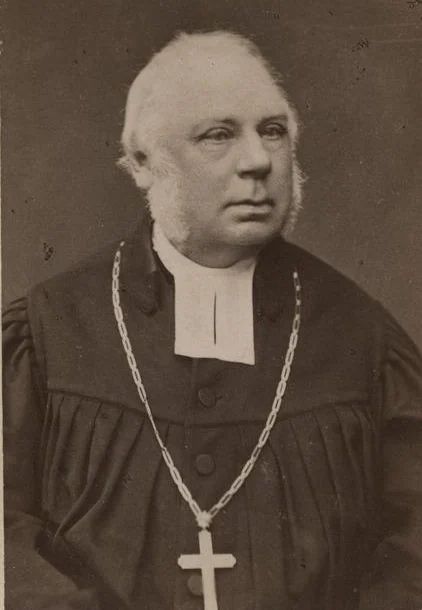

Ernst Wilhelm Woldemar Schultz (5 December 1813 Tartu – 21 September 1887 Tallinn) completed the gymnasium in Tartu and studied at the theological faculty of the University of Tartu from 1832 to 1836, then philology and theology at Halle and Berlin from 1838 to 1839. Ordained in 1842, he first served the parish of Saarde from 1842 to 1846.
From 1846 to 1863 he was pastor of St Elizabeth’s Parish in Pärnu and from 1856 to 1863 also dean of the Pärnu district. His ministry saw the great interior renovation of 1850, when the church received its present altar and pulpit, and the installation of the altar painting The Resurrection in 1854.
In 1863 Schultz was called to Tallinn: he became General Superintendent of Estonia, vice-president of the Estonian consistory and chief pastor of the Cathedral congregation. In 1883 the University of Tartu awarded him an honorary doctorate in theology. He took part in the work of the Bible Society and the Gospel Society, wrote schoolbooks in Estonian and translated hymns, and from 1847 to 1849 published, together with F. W. A. Hasselblatt of Karuse, the religious journal Leiwakorwikenne.
Historical honesty requires the other side to be told as well: Schultz did not favour the admission of theologically educated Estonians to the ministry and supported the idea of the voluntary Germanisation of Estonians. He thus embodies at once the pastoral care of his age and the tensions of the Baltic German view of society.
Years of service in the sources. For the beginning of his term the more recent list of pastors gives 1846, while the parish’s earlier list gives 1847.
1863–1881 Conrad Wilhelm Heinrich Bergwitz
Conrad Wilhelm Heinrich Bergwitz (23 November 1833 Riga – 16 June 1881 Pärnu) studied at the Riga governorate gymnasium from 1843 to 1851 and at the theological faculty of the University of Tartu from 1852 to 1855. He spent his probationary year in 1858 at Kanepi under Georg von Holst and was ordained in Tartu on 31 January 1861.
He was adjunct pastor at Kanepi in 1860, pastor of Mustjala from 1861 to 1863, and from 22 September 1863 until his death in 1881 pastor of St Elizabeth’s Parish in Pärnu. He is buried in Pärnu’s Alevi cemetery.
Bergwitz’s ministry coincided with the rapid growth of Pärnu and the beginning of the Estonian national awakening — it was in these same years that Johann Voldemar Jannsen published in Pärnu the first Estonian-language weekly, Perno Postimees; he also attended services at St Elizabeth’s and sang in the church choir.
1881–1889 Constantin Lementy
Constantin Eduard Valentin Lementy (11 February 1848 Aidu, Paistu parish – 28 November 1889 Berlin) completed the progymnasium in Pärnu and the gymnasium in Tartu and studied at the theological faculty of the University of Tartu from 1867 to 1873. He spent his probationary year at St Mary’s in Tartu under Adalbert Hugo Willigerode and was ordained on 17 November 1874.
Before coming to Pärnu he was vicar of the Võru district (1874–1875), vicar of Kadrina (1876–1879) and pastor of Kihelkonna (1879–1881). He was inducted as pastor of St Elizabeth’s Parish in Pärnu on 8 November 1881 and held that office until his death in 1889, which came upon him in Berlin.
1890–1934 Johannes Hasselblatt
Ferdinand Alexander Johannes Hasselblatt (4 October 1861 Kambja – 25 July 1934 Pärnu) served St Elizabeth’s Parish for forty-four years — longer than any other pastor except Salomo Heinrich Vestring.
He came of a clerical family: his grandfather was pastor of Viru-Nigula and his father pastor of Kambja. He completed the gymnasium in Tartu, studied at the theological faculty of the University of Tartu from 1882 to 1887, spent his probationary year at Võnnu, Kambja and Rõuge, and was ordained on 20 March 1888. He was inducted as pastor of St Elizabeth’s Parish in Pärnu on 15 April 1890.
Hasselblatt was also prison chaplain, an army chaplain from 1921 to 1923, and acting dean of the Pärnu district from 1929 to 1930. His ministry saw the greatest building works and changes in the parish’s history: in 1893 the southern transept and galleries were completed and the enlarged church was consecrated on 19 October; in 1899 the Ülejõe prayer house was consecrated; in 1924 the parish, grown very large, was divided into two pastoral districts, each with its own pastor; and in 1928 the church received the organ still in use today.
One small detail is characteristic. As early as 1890 the temperance society Valgus gave money towards the extension, and Hasselblatt praised its members as helpers “in the fight against the disease of drink”. Today AA groups meet in the same church — the struggle against addiction continues where the temperance society began it in the nineteenth century. Hasselblatt is buried in Pärnu’s Alevi cemetery.
It is also to Hasselblatt that we owe the parish history published in 1898, which remains one of the most important sources for the earlier centuries.
1925–1940 August Arumäe
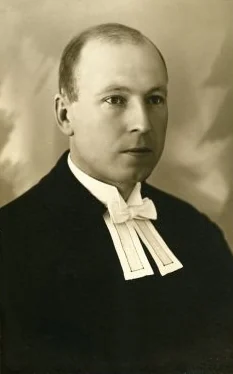

August Arumäe (until 1939 August Grünberg; 11 August 1895 Heimtali, Viljandi County – 26 September 1976 Pärnu) completed the Pärnu Alexander Gymnasium in 1916 and the theological faculty of the University of Tartu in 1924, spent his probationary year at St Peter’s in Tartu and was ordained on 1 January 1925.
He was pastor of St Elizabeth’s second pastoral district from 1925 and of St Elizabeth’s Second Parish from 1935, and dean of the Pärnu district from 1930 to 1941. It was on his initiative, and with the support of many donors, that a new organ was ordered for the church in 1928. When most members of St Nicholas’s Parish in Pärnu left for Germany in 1939, St Elizabeth’s Second Parish, led by Arumäe, resolved to bring the old St Nicholas’s Church back into use. On 28 August 1940 the Consistory dissolved St Nicholas’s Parish and renamed St Elizabeth’s Second Parish as Pärnu Niguliste Parish, of which Arumäe was pastor from 1940 to 1941.
In 1941 Arumäe was arrested by the NKVD and deported. After returning from Siberia he served the parish of Pindi from 1958 to 1964 and then Häädemeeste until 1969. He was a lecturer in practical theology at the EELC Institute of Theology and the author and co-author of religious-education textbooks published in the 1930s and 1940s. His memoirs, “Hiiobi õnnistus” (Job’s Blessing), appeared in 2005. Arumäe is buried in Pärnu’s Alevi cemetery.
Years of service in the sources. For his term as pastor of St Elizabeth’s second pastoral district and Second Parish, both the parish’s earlier list and his Wikipedia article give 1925–1940; the 1925–1941 given in the more recent list of pastors also covers the period after the renaming of 1940, when the same parish bore the name Pärnu Niguliste Parish.
1935–1944 Harry Johann Nuudi
Harry Johann Nuudi (15 June 1894 Sindi – 3 May 1965 Christiansted, US Virgin Islands) was a man of Pärnu: he attended the Sindi primary school and the Pärnu boys’ gymnasium and then read theology at the University of Tartu. Before ordination he taught Latin and religious education at the Pärnu joint gymnasium; he was ordained on 13 April 1930.
After serving the parish of Pärnu-Jakobi (1930–1935) he was pastor of St Elizabeth’s First Parish from 1935 to 1939 and pastor of the whole parish from 1939 to 1944. From 1935 to 1940 he was also an assessor of the consistory.
Nuudi was a wide-ranging worker in social care: curator of the Home Mission Society’s institution Nain, chairman of the Estonian Society of the Blind, honorary chairman of the Estonian Society of the Deaf and Dumb, board member of the Society for the Fight against Tuberculosis and chairman of the Prisoners’ Welfare Society. His ministry also encompassed the bombing of July 1941, in which St Elizabeth’s Church was severely damaged.
In 1944 he fled to Germany, ministering to Estonians in Pomerania, Kappeln and Oldenburg, and after the war he organised the church life of Estonians in the British occupation zone and was acting dean from 1948 to 1950. From 1950 he lived in the United States, edited the journal Usu Sõna in Chicago from 1949 to 1955, and from 1956 to 1965 was pastor of the congregation in Christiansted and mission pastor of the US Virgin Islands.
1941–1945 Juhan Reidak
Juhan Reidak (until 1936 Juhan Reitag; 29 September 1876 Pärsti – 1 March 1945 Tori) served St Elizabeth’s Parish during the war years from Tori, being at the same time acting dean of the Pärnu district from 1941 to 1945.
He studied at the Pärsti village school, the Viljandi parish and town schools, the Hugo Treffner Gymnasium and the Pärnu gymnasium, and then at the theological faculty of the University of Tartu from 1897 to 1901. He was ordained at Tarvastu on 20 March 1904. He was vicar of the Viljandi district, pastor of Püha from 1907 to 1911 and, from 1911 until his death, pastor of Tori, as well as assistant dean of the Pärnu district from 1930 to 1945.
Reidak died in office in March 1945. His daughter Irene married Hillar Põld in 1943, who shortly afterwards became pastor of St Elizabeth’s Parish.
1945–1953 Hillar Põld
Hillar Hans Põld (7 September 1911 Kose – 29 April 1980 Tallinn) was a qualified pianist before he took up theology: in 1935 he graduated from the Tallinn Conservatoire with a concert pianist’s diploma. He read theology at the University of Tartu from 1935 to 1940 and again from 1942 to 1943, and was ordained on 4 April 1943 in Tallinn Cathedral by Bishop Johan Kõpp.
From 1945 to 1953 he was pastor of St Elizabeth’s Parish in Pärnu and at the same time acting dean of the Pärnu district, and in 1946 also administrator of the parish of Tori. These were the hardest years the parish had known: a town in ruins after the war, the confiscation of church property, the banning of religious education and the beginning of the repressions.
From Pärnu he moved in 1953 to the parish of Simuna (until 1974) and then to Juuru. He was a lecturer and professor of historical theology at the Institute of Theology and a member of the EELC Bible translation and liturgical commissions. His father Harald Põld was pastor of Kose and director of the foreign mission of the Estonian Mission Society; his uncle Peeter Põld was a well-known figure in education and public life.
1953–1963 Albert Roosvalt
Albert Roosvalt (16 February 1903 Tudulinna – 3 February 1963 Pärnu) was a schoolteacher before entering the ministry: he graduated from the Rakvere Teachers’ Seminary in 1925. He completed the theological faculty of the University of Tartu in 1934 and was ordained in Tallinn Cathedral on 31 May 1936 by Bishop Hugo Bernhard Rahamägi.
Two periods connect him with St Elizabeth’s Parish. On 13 December 1936 he was elected youth-work pastor of St Elizabeth’s First and Second Parish and took up the post on 1 January 1937. From 1939 to 1953 he served the parishes of Leesi, Kuusalu and Loksa and was assistant dean and then dean of the Ida-Harju district. In 1953 he was called back to Pärnu: he became pastor of St Elizabeth’s Parish and, on 29 July 1953, dean of the Pärnu district.
Roosvalt died in office in February 1963 and is buried in Kuusalu cemetery. His son Uno Roosvalt is a painter.
1955–1956 Rein Laubach
Rein Laubach (1930–1985) served St Elizabeth’s Parish in Pärnu from 1955 to 1956 as assistant to Dean Albert Roosvalt. In the early Soviet years it was usual for a large town parish to be served by two clergymen, the second of them an assistant pastor; Laubach was the first of these after the war.
Very little record of his life survives in public sources — he is one of those clergymen whose work went largely undocumented at a time when the activity of the church was restricted in every way.
1956–1962 René Tasmuth
René Erich Tasmuth (16 February 1928 Tallinn – 23 February 2008 Tallinn) completed Tallinn Secondary School No. 2 in 1946, was confirmed at Toompea Charles’s Church and began to study medicine, but in 1947 entered the Institute of Theology. He was ordained deputy pastor on 23 August 1951 and received full pastoral rights in 1960.
From 1951 to 1956 he was pastor of Vändra and administrator of the parish of Tori, and from 1 June 1956 until 1962 he served St Elizabeth’s Parish in Pärnu as assistant to Dean Albert Roosvalt. He was released from Pärnu in July 1962 on grounds of health.
He later served the parish of Jõelähtme and, from 1967, the Harku Street chapel, a branch of the Nõmme Rahu parish, which became his life’s work. He is remembered above all as a powerful and compelling preacher whose sermons were rich in examples drawn from life. His son Randar Tasmuth is a clergyman and theologian.
1962–1989 Evald Saag
Evald Saag (24 November 1912 Krabi, Võru County – 20 October 2004 Tallinn) was a theologian and clergyman who served St Elizabeth’s Parish in Pärnu for twenty-seven years — the longest continuous ministry of the whole Soviet period.
He attended the Krabi primary school, completed the Võru Education Society gymnasium and the Tondi military school, and entered the theological faculty of the University of Tartu in 1935, graduating in 1940 with a master’s degree in theology in Old Testament studies and Semitic philology. He was ordained vicar on 14 December 1941 by Bishop Johan Kõpp. Before Pärnu he served the parishes of Paldiski and Rapla and was acting dean of the Ida-Harju district.
Saag was one of the founders of the EELC Institute of Theology, where he served as dean and head of the chair of Old Testament; in 1980 he was made an honorary doctor of the institute. In 1996 the consistory conferred on him the honorary title of dean, and in 2001 President Lennart Meri awarded him the Order of the White Star, third class. He was a legendary figure among the intelligentsia, a fine storyteller and teacher whose lectures survive in the recordings of the “Night University” radio series.
In 1942 Evald Saag married Agnes, the sister of Uku Masing. He is buried in Rapla cemetery.
1962–1990 Richard Võlli
Richard Karl Erich Võlli (8 April 1911 Rannu – 23 July 2002 Pärnu) completed the Hugo Treffner Gymnasium in 1931 and studied at the theological faculty of the University of Tartu from 1933 to 1937. He was ordained on 26 December 1938.
He was vicar of the Valga district, personal adjunct to Jaak Taul, pastor of St Peter’s in Tartu, and teacher of religious education at the Hugo Treffner Gymnasium, and from 1941 to 1944 pastor of Halliste. On 16 November 1944 he was arrested by the NKVD and was not released until 1956 — twelve years of imprisonment.
After his release he served the parish of Tori from 1956 to 1962, and from 1962 to 1990 he was pastor of St Elizabeth’s Parish in Pärnu and dean of the Pärnu district. The years in which he and Evald Saag served side by side were a time of steadfastness for the parish: despite all restrictions, worship in the church was never once interrupted. In 1997 Võlli was honoured with the Pärnu coat-of-arms badge for his work in the religious and spiritual life of the town. He is buried in Pärnu’s Alevi cemetery.
1990–2005 Andres Põder
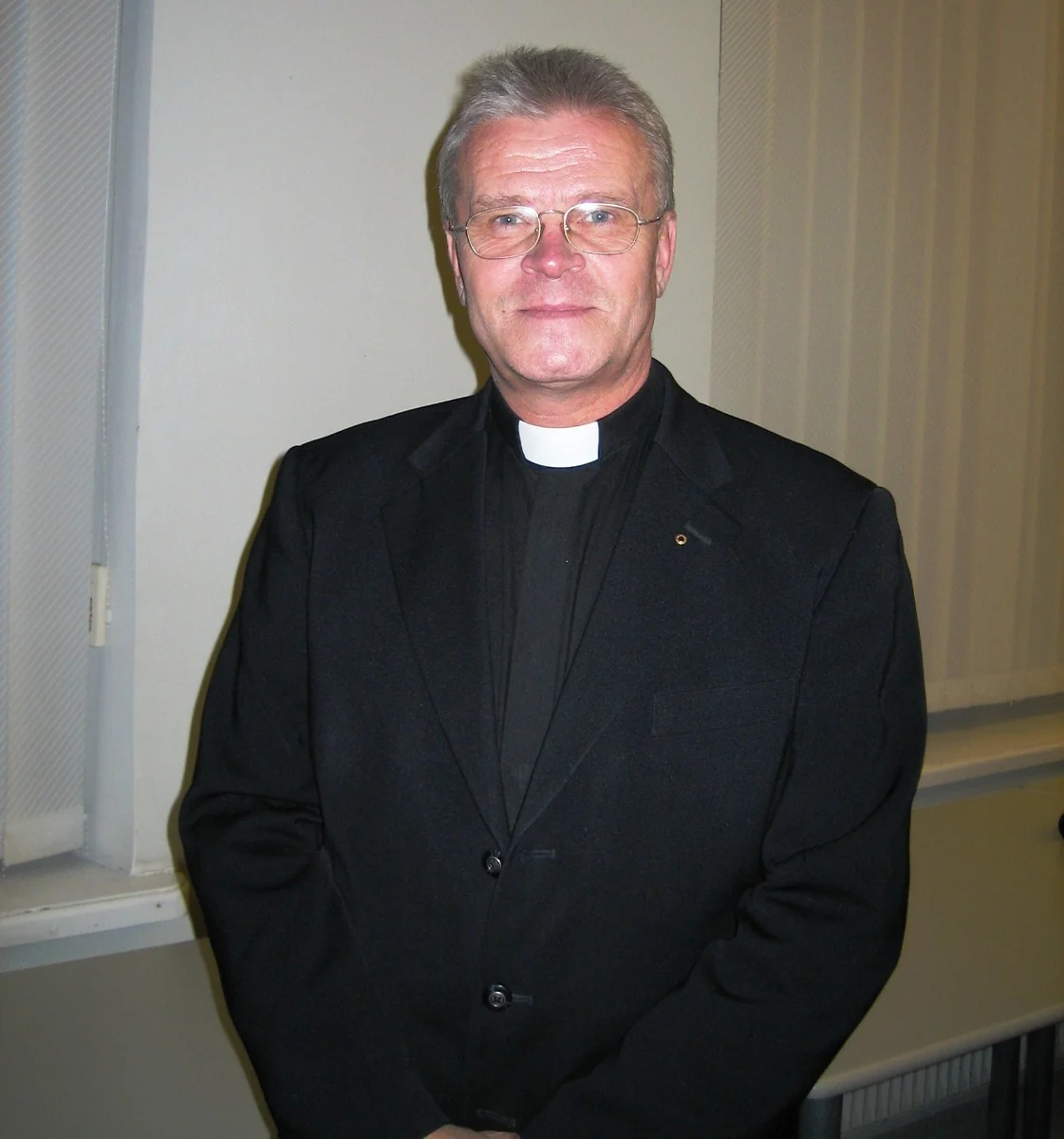

Andres Põder (born 22 November 1949 in Haapsalu) came to serve St Elizabeth’s Parish in 1990 — at a time when a newly independent Estonia was bringing crowds back to the church, which was full to overflowing on Sundays.
He was ordained deputy pastor on 19 September 1976 and received full pastoral rights after completing the Institute of Theology in 1980. Before Pärnu he served the parishes of Viru-Nigula and Kunda, Suure-Jaani and Kõpu, and Räpina and Mehikoorma. From 1990 to 2005 he was pastor of St Elizabeth’s Parish in Pärnu, dean of the Pärnu district and an assessor of the EELC Consistory.
Great works were carried out in the church during his ministry: the roof was replaced in 1991, the church regained its original colours in 1992, the parish house was built onto the church in 1993–1995 and consecrated by Bishop Einar Soone on 16 June 1995, and the nave was renovated in 1994–1995. Põder was also a member of the Congress of Estonia and deputy chairman of Pärnu town council.
On 24 November 2004 the Church Assembly elected Andres Põder Archbishop of the EELC, and he was installed on 2 February 2005 in Tallinn Cathedral. He served as Archbishop until 2014 and was president of the Estonian Council of Churches from 2013 to 2022. Among other honours he has received the Pärnu coat-of-arms badge (2005), the Order of the White Star, second class (2006), and the EELC lifetime achievement award (2022).
2005–2016 Enn Auksmann
Enn Auksmann (born 30 October 1969 in Pärnu) is a native of the town. He studied history at the University of Tartu from 1987 to 1990 and at the Institute of Theology from 1990 to 2003. He was ordained deputy pastor on 10 October 1992 and, before coming to Pärnu, served the parishes of Jõelähtme, Paide and Anna, and from 1998 to 2004 Kärdla, Pühalepa and Reigi on Hiiumaa.
He came to St Elizabeth’s Parish in 2004 as assistant to Andres Põder, and after Põder’s election as Archbishop became pastor of the parish in 2005. He was elected dean of the Pärnu district in 2005, 2009 and 2013.
Auksmann has contributed to and presented programmes for the Estonian Lutheran Hour, Estonian Christian Television and Pereraadio, and since Advent 2019 he has compiled preaching aids for the clergy of the EELC. In 2008 he received the EELC media award and in 2022 the EELC Cross of Merit, third class. In the summer of 2016 he moved with his family to the United States and became pastor of the Los Angeles congregation of the Estonian Evangelical Lutheran Church abroad.
2018–2024 Tõnu Taremaa
Tõnu Taremaa (born 24 May 1959 in Tallinn) was trained as a musician: he completed the Tallinn Music High School in 1977 and the Tallinn State Conservatoire in music pedagogy in 1982. He studied theology at the Institute of Theology from 1992 to 2007, and was ordained deacon on 11 August 1991 and pastor on 9 March 2007.
He has served the parishes of Ilumäe, Kunda and Viru-Nigula, Pärnu-Jakobi, Tori and Sindi. He was acting dean of the Pärnu district from 2016 and dean from 2017 until April 2025. He was pastor of St Elizabeth’s Parish in Pärnu from 1 April 2018 until 31 October 2024.
His ministry also encompassed the coronavirus pandemic, which obliged the parish to find new ways of holding services and carrying on its work. On 27 December 2025 Taremaa joined the Roman Catholic Church and was, from the same date, removed from the register of EELC clergy.
2024– Toomas Nigola
Toomas Nigola (born 10 January 1981 in Pärnu) is the parish’s present pastor. He completed the Pärnu Koidula Gymnasium in 1998, studied at the theological faculty of the University of Tartu from 1998 to 2003, at the EELC Institute of Theology from 2003 to 2007, and communication management at the University of Tartu from 2015 to 2017. He was ordained deacon on 13 April 2003 and pastor on 9 March 2007.
Before his present office he served as a lay preacher and deacon in the parish of Kambja, was chaplain of Tartu Prison from 2002 to 2003, and executive secretary of the European section of the International Prison Chaplains’ Association from 2004 to 2005. He has completed police chaplaincy training in the United States and took part in establishing the police chaplaincy in Estonia. His 2006 diploma thesis at the EELC Institute of Theology, “A Christian Police Chaplain’s Handbook”, became the basis of the Estonian police chaplain’s handbook published in 2009, of which he is co-author together with Dr Tõnis Nõmmik.
His connection with St Elizabeth’s Parish goes back to 2005, when he came to serve here first as deacon and then as assistant pastor. From 2007 to 2024 he was pastor of the parish of Põlva. On 22 September 2024 the council of St Elizabeth’s Parish elected him pastor; he took up his duties on 1 November and was installed on 3 November 2024. On 11 April 2025 the synod of the Pärnu district elected him dean.
Since 2015 he has been involved in the church-wide media work of the EELC — first invited to convey the church’s message through social media, and since November 2023 responsible in the church government for public relations more broadly. On 30 April 2024 the Church Assembly elected him an assessor of the EELC, and in the same year he was named EELC Clergyman of the Year.
2025– Joel Pulk
Joel Pulk (born 1 April 1972 in Tartu) is the parish’s present assistant pastor. He came to the ministry by way of a long career as a schoolman.
Before ordination he taught history and civics at Pärnu Ülejõe School and gave classes in religious studies at upper-secondary level. From 2017 to 2020 he was head of Käina School on Hiiumaa, moving there with his family, and returned to Pärnu in the summer of 2020. He led Pärnu-Jaagupi Basic School until June 2026 and now teaches at Pärnu Christian Private School alongside his parish work.
Joel Pulk spent his probationary year in the parish of Pärnu-Jakobi under the guidance of the Revd Kristiina Jõgi. He was ordained a pastor of the EELC on Ascension Day, 29 May 2025, in Tallinn Cathedral.
He was installed as assistant pastor of Pärnu St Elizabeth’s Parish by Anti Toplaan, Bishop of Saare-Lääne, at the evening mass of 22 June 2025. The bishop was assisted by the parish’s former pastor, Archbishop emeritus Andres Põder, and its present pastor Toomas Nigola; Dean emeritus Tõnu Taremaa and the Revds Aili Ilves and Meelis Malk also took part.
In his first sermon as assistant pastor of the parish he said: “I wish to walk everywhere as a servant of God’s Word.” By virtue of his office the assistant pastor is also a member of the parish board.
The parish clergy today
The pastor of Pärnu St Elizabeth’s Parish is Toomas Nigola and the assistant pastor Joel Pulk. Services are held every Sunday at 10 a.m. and on Wednesdays at 6 p.m. The clergy can be reached through the parish office: Nikolai 22, Pärnu, telephone +372 5666 4626, e-mail parnu.eliisabeti@eelk.ee.
Sources
- Johannes Hasselblatt. “Pärnu Elisabeti-kiriku ajalugu” (The History of St Elizabeth’s Church in Pärnu). Tartu: K. Mattiesen, 1898
- “Pärnu Eliisabeti kogudus” and the articles on individual clergy in the Estonian Wikipedia
- The list of pastors published on the parish’s earlier website
- Kristjan Luhamets. “Koguduse lugu: Pärnu Eliisabeti kogudus”. Pereraadio / e-Kirik, 2021
- “Pärnu Eliisabeti kogudus. Eel- ja ajalugu”. Pärnu, 2000
- Die evangelischen Prediger Livlands bis 1918. Böhlau Verlag, Cologne–Vienna, 1977
- Konrad Veem. “Eesti Vaba Rahvakirik. Dokumentatsioon ja leksikon”. EVR, Stockholm, 1988
- K. E. Napiersky. “Livländische Kirchen- und Prediger-Matrikel”, 1843
- The EELC clergy lexicon, the EELC parish register, the newspaper Eesti Kirik and the e-Kirik news service
See also the history of St Nicholas’ Parish in Pärnu and its clergy.