Contents
Three parishes and a shared musical heritage
St Elizabeth’s cantors and schoolmasters
- The Lorenzsonn brothers: singing and literature
- Reorganisation of the cantor’s post in 1895
- Organ and choral singing in the nineteenth century
The organists of St Nicholas’s
St Elizabeth’s organists and choir directors in the twentieth century
The history of church music in Pärnu is a history of people. Cantors taught congregations to sing and children to read; organists accompanied worship, and choir directors brought different generations together in song. The musicians of St John’s, St Nicholas’s and St Elizabeth’s parishes belong to the cultural history of both the Church and the city.
Three parishes and a shared musical heritage
Pärnu’s Estonian-speaking congregation initially worshipped at St John’s. After losing that church in 1714, it used St Nicholas’s until its new St Elizabeth’s Church was completed in 1750. St Nicholas’s chiefly served the town’s German-speaking community, while also hosting services in Latvian. These intertwined histories explain the Estonian, German and Latvian names in Pärnu’s church music heritage. [1]
The duties attached to these titles have changed over time. The historical Estonian köster, here rendered as cantor, could teach singing, run a school, assist with confirmation instruction and help the pastor. An organist plays the organ; a cantor directs congregational singing, and a choir director trains and conducts a choir. One person often held several roles. This overview distinguishes documented appointments from individual reports of activity; it is not an uninterrupted succession list. [2]
The cantors of St John’s
| Name and period | Role and parish connection |
|---|---|
| Hans Habicht 1700–1724 | The first cantor of St John’s, Pärnu’s Estonian congregation, named in Johannes Hasselblatt’s history. [2] |
| Martin Joachim Hidde 1724–1749 | Habicht’s successor; a tailor by trade. Served the Estonian congregation while it worshipped at St Nicholas’s. [2][1] |
Drawing on the church chronicle, Hasselblatt records Hans Habicht’s appointment as cantor in 1700. Habicht died in 1724, and his successor Martin Joachim Hidde in 1749. Both therefore served before the consecration of St Elizabeth’s Church. Their names belong to the earlier St John’s period of today’s parish. [2]
St Elizabeth’s cantors and schoolmasters
| Name and period | Role and parish connection |
|---|---|
| Karl Gustav Hilde 1752–1778 | Cantor of St Elizabeth’s parish. [2] |
| Karl Gustav Schubbert After Hilde | Cantor and schoolteacher; according to Hasselblatt, teaching occupied most of his working time. [2] |
| Heinrich Gottlieb Lorenzsonn 1825–1830 | Cantor-schoolteacher, writer and pupil of Johann Heinrich Rosenplänter. [3][4] |
| Caspar Franz Lorenzsonn 1830–1875 | Cantor, schoolteacher, translator and editor of Perno Postimees. [2] |
| Jakob Kibe 1875–1895 | Cantor and parish schoolteacher; Caspar Franz Lorenzsonn’s son-in-law and former deputy. [2] |
| J. Kuus Appointed 12 December 1895 | Schoolteacher installed as organ player and cantor. [2] |
| Artur Jung 1900–1907 | Cantor-organist of St Elizabeth’s, later a lawyer and public figure. [5] |
The Lorenzsonn brothers: singing and literature
Heinrich Gottlieb Lorenzsonn (1803–1847) was a pupil of Rosenplänter. His Estonian Robinson adaptation, completed in 1822–1823, was based on Joachim Heinrich Campe’s work rather than being a direct translation of Daniel Defoe’s novel. An abridged version appeared in 1842. In 1830 he left his cantor’s position and continued as a teacher at Pärnu’s elementary school. [3][4]
Caspar Franz Lorenzsonn (1811–1880), whose first name also appears as Kaspar, succeeded his brother and served as cantor for 45 years. Hasselblatt recalls his Bible classes, confirmation teaching and participation in funerals; when his health declined, his son-in-law Jakob Kibe deputised for him. He translated Jenowewa ellust into Estonian and was responsible editor of Perno Postimees in 1864–1879. His work brought together church, school and Estonian-language reading. [2]
Reorganisation of the cantor’s post in 1895
On 30 October 1895 the church convention decided temporarily to replace the existing cantor’s position with an assistant pastor and an organ player. The large parish needed another pastor but could not afford all the old and new posts. On 12 December 1895 J. Kuus was installed as organ player and cantor. Artur Jung’s later title of cantor-organist shows that terminology continued to evolve. [2][5]
Alongside his work as cantor-organist, Artur Jung (1877–1959) participated in Pärnu’s Estonian associations and education. A 1939 reference work also names him as a board member and choir director of the Endla Society and a founder of the Pärnu Estonian School Society. He later trained in law and became a lawyer. His career illustrates church musicians’ contribution to civic life. [5]
Organ and choral singing in the nineteenth century
Hasselblatt notes that during Johann Friedrich Schulinus’s ministry (1775–1798), St Elizabeth’s still had neither an organ nor an organist. An organ completed in 1845 underwent extensive repairs in 1857. Earlier cantors thus led singing at a time when hymns were not yet accompanied by an organ. [2]
M. Söörd conducted St Elizabeth’s church choir at the consecration of the renovated church on 19 October 1893. Choirs led by Reiu schoolmaster Hansschmidt and former schoolmaster M. Must also sang at that service. Named evidence of parish choral singing therefore survives from the nineteenth century, although a report of one performance does not establish a complete succession of choir directors. [2]
The organists of St Nicholas’s
St Nicholas’s had an organ before the nineteenth-century development of concert life. An organ built by Christoph Memmken is associated with the restoration of 1649; the instrument then in use was destroyed in the tower fire of 1885. Biographical accounts and concert reports shed light on the later organists. [1]
| Name and period | Role and parish connection |
|---|---|
| Max Peters In Pärnu 1883–1893 | Organist of St Nicholas’s and teacher of Mihkel Lüdig; also a pianist and choir director. [6][7] |
| Vühner 1890s, before Lüdig | Organist active after Peters and a teacher of Lüdig. [8] |
| Mihkel Lüdig 1896–1897 | Organist of St Nicholas’s before studying at the conservatoire. [9] |
| Woldemar Schütz Before 1903 | Koch associates him with St Nicholas’s in the form “St. Nicolai ?–1903”; the question mark leaves the starting year unspecified. [7] |
| Alfrēds Kalniņš 1903–1911 | Latvian composer, organist of St Nicholas’s and contributor to Pärnu’s musical life. [10][11] |
Max Peters, Vühner and the young Mihkel Lüdig
Mihkel Lüdig’s musical education gained a firm foundation under Max Peters (1849–1927). In Pärnu he studied piano, organ and music theory and could deputise for his teacher at children’s services. Vändra Music School’s account highlights Peters’s work as organist, pianist and choir director. [6]
A 1929 anniversary article in Muusikaleht adds the organist Vühner to this story. Lüdig studied with him for another two or three years after Peters left; Vühner subsequently also left Pärnu. According to the same article, sixteen-year-old Lüdig gave his first organ recital at St Nicholas’s in 1896 with Miss Söörd’s Estonian choir. [8]
Mihkel Lüdig (1880–1958) served as organist of St Nicholas’s in 1896–1897. He went on to the Moscow and St Petersburg conservatoires and worked as an organist and choir director in St Petersburg and Tallinn. His beginnings in Pärnu’s churches form part of the history of Estonian professional music and song festivals. [9][6]
Alfrēds Kalniņš: Latvian music and Pärnu
Alfrēds Kalniņš (1879–1951) worked at St Nicholas’s in Pärnu in 1903–1911. The Latvian Music Information Centre’s album booklet explicitly confirms the church and dates. The Latvian National Library describes him as a composer, organist, pianist, conductor and writer on music. He later composed the Latvian national opera Baņuta, became organist of Riga Cathedral and rector of the Latvian Conservatoire. His Pärnu years belong to the early stages of this international career. [10][11]
Klaus-Peter Koch’s reference work names Otto Muyschel (1874–1928) as Pärnu’s municipal music director, choir director and organist of St Nicholas’s around 1910. Since this approximate report overlaps with Kalniņš’s documented years in Pärnu, it is presented as a separate notice of activity rather than an appointment beginning after Kalniņš. [7]
St Elizabeth’s organists and choir directors in the twentieth century
Peeter Laja and Oskar Valker
Peeter Laja (1897–1970) is named as an organist of St Elizabeth’s in Jaanus Torrim’s article on the history of organ teaching. In 1925 Laja graduated from Tallinn Conservatoire, having studied organ with August Topman and composition with Artur Kapp. His activities included recitals, conducting, teaching and composition. In 1945 he founded Pärnu Children’s Music School and led it until 1950. [12][13]
Oskar Valker (Valkner) is likewise named as an organist of Pärnu St Elizabeth’s in the same account of organ teaching. He graduated in the conservatoire’s seventh organ class, in the academic year 1930/1931. [12]
August Arumäe – pastor and choir director
August Arumäe (1895–1976), known as Grünberg until 1939, served St Elizabeth’s second pastoral district from 1925. Viljandi City Library’s local history account highlights his founding and conducting of a church choir and his translations for its repertoire. His work therefore also belongs in this account of choral music. His ministry is described on the parish clergy page. parish clergy. [14]
Merike Saaremets – organ, teaching and hymns
Merike Saaremets (1960–2025) worked as organist of St Elizabeth’s and taught organ at Pärnu Sütevaka Humanities School. She studied with Hugo Lepnurm and Rolf Uusväli and graduated as an organist and choir director from the EELC Church Music School in 1994. As a founding member of the Church Music Association and a teacher, her contribution extended beyond Pärnu. She later served Suure-Jaani and Kõpu parishes. Her obituary emphasises her love of traditional congregational chorales and clear Estonian. [15]
Kristel Neitsov-Mauer – from boys’ to women’s choir
Recalling the start of her church music career, Kristel Neitsov-Mauer described how Merike Saaremets’s request that she accompany a chorale on the piano during a confirmation class brought her into parish music. She subsequently conducted the boys’ choir, accompanied the children’s choir and directed the women’s choir. The desire to understand the Christian message more deeply led her to theological studies in 1999. Her memories connect everyday choir work with a musician’s spiritual formation. [16]
Elise and more recent musicians
Kai-Tõe Ellermaa and the girls’ choir Elise
Kai-Tõe Ellermaa (born 1960) founded St Elizabeth’s girls’ choir Elise in 1990 and shaped its artistic development as conductor. She studied conducting at the Heino Eller Music School in Tartu and Tallinn Conservatoire. Elise brought generations of young singers into parish choral life and performed at international festivals and competitions. [17][18] The choir has no longer been active since the years of the coronavirus pandemic.
Other musicians have also supported the choir. Its 2015 anniversary introduction names Gerly Kättmann as accompanist and Ruth Lehis as vocal coach. These are distinct roles: piano accompaniment supports rehearsals and performances, while vocal coaching develops the singers’ technique. [18]
Jaanus Torrim – organist, conductor and organ project leader
Jaanus Torrim (born 1975) began as organist of St Elizabeth’s in 1999 and, according to the EELC lexicon, served as the parish’s choir director in 2000–2010. His activities combined playing for worship, composition, conducting and concert organisation. The lexicon records the parish mixed choir performing Urmas Sisask’s Eesti missa in 2001 and joining Kuressaare parish’s mixed choir for Gabriel Fauré’s Requiem in 2006. [17]
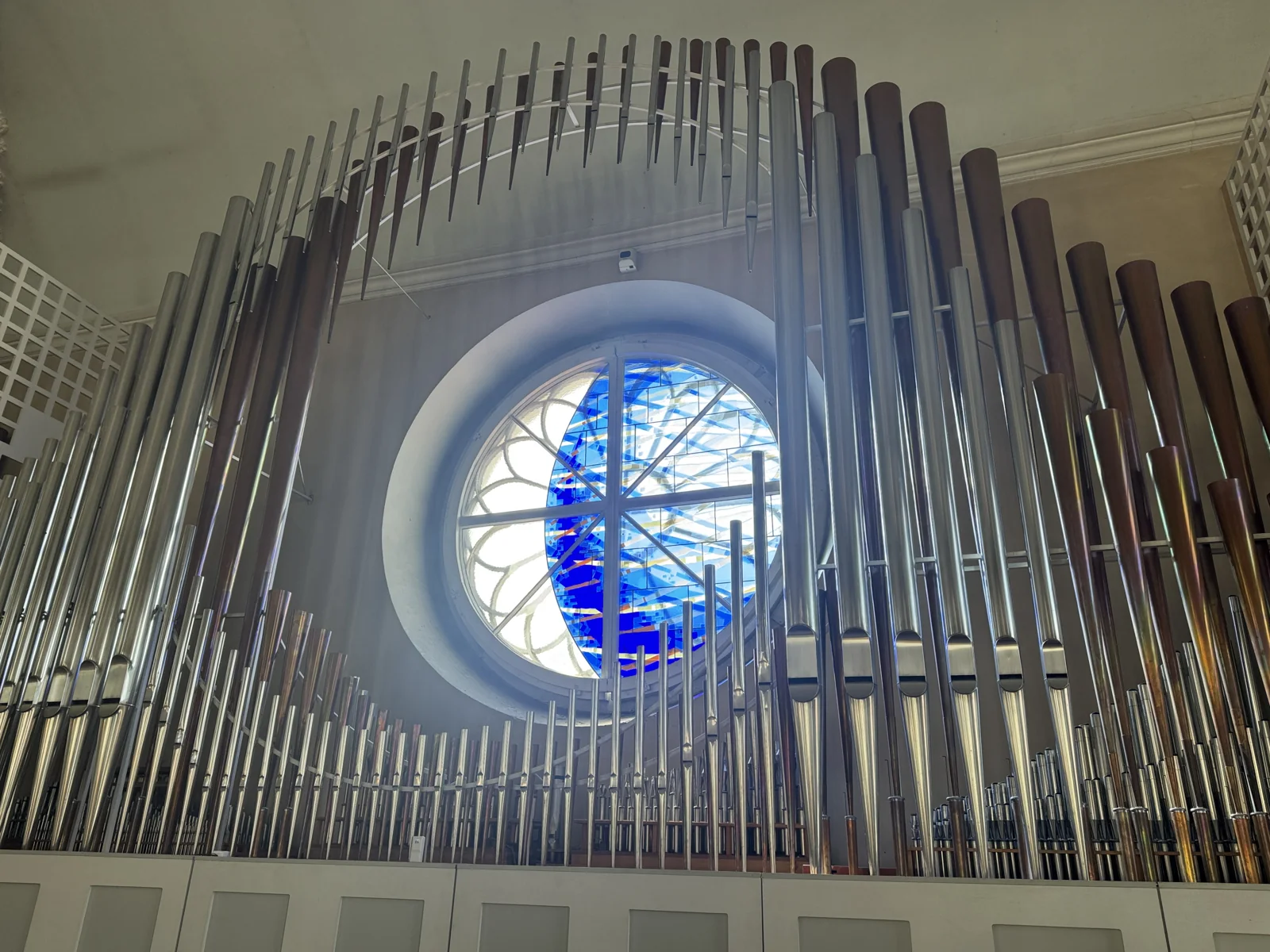
Torrim established the church’s organ fund in 2000 and led the project to build the Hardo Kriisa organ completed in 2010. His 2010 interview explains that the idea for a second organ arose after repairs to the old instrument ended in 2001. New opportunities to perform with choir and orchestra also linked the organist’s work to the church’s development as a concert venue. [18][19]
Aaro Tetsmann – organist and director of music
Aaro Tetsmann (born 1966) is St Elizabeth’s organist and director of music. According to the EELC lexicon, he began as parish organist in 2014, having previously served Viljandi St Paul’s. His studies encompassed music theory, church music and organ, including at the Sibelius Academy in Helsinki. [17][20]
Aita-Liis Torrim
Aita-Liis Torrim is a former organist of Pärnu St Elizabeth’s parish.
Ines Maidre – artistic director of Pärnu Organ Festival
Ines Maidre (born 1958) is a Pärnu-born organist and harpsichordist and has been artistic director of Pärnu International Organ Festival since 2014. Her themed programmes bring Estonian and international organists, singers and instrumentalists to St Elizabeth’s during the summer. Concerts explore the organ both as a solo instrument and in ensemble. [21]
Maidre studied piano with Bruno Lukk and organ with Hugo Lepnurm, later continuing her studies in Paris with Daniel Roth. Alongside her international performing career she has taught organ; her pupils include St Elizabeth’s organist Aaro Tetsmann. [22]
Maidre also frequently performs at St Elizabeth’s outside the organ festival. For example, she played the organ in the 2026 ÖÖvalgel festival production Pilgud taevasse, which combined organ and electronic music with lighting and projections. [23]
Music in the parish today
Aaro Tetsmann is the parish organist and director of music. [20] The parish has a women’s choir conducted by Tiiu Künnapas. Pärnu’s ecumenical women’s choir Oiku, conducted by Ester Murrand, also rehearses in the parish house. If you would like to sing or contribute to parish music in another way, please contact the parish office for current information about singing opportunities, rehearsals and joining in.
Preserving this heritage
Pärnu’s church music history includes more than organs and famous composers. Choir rehearsals, teaching hymns, small choirs serving worship and musicians’ sustained work are part of the same heritage. Cantors’ teaching, the educational work of St Nicholas’s organists and the activities of St Elizabeth’s children’s, women’s and mixed choirs reveal its different aspects.
The musicians’ service history has yet to be fully mapped. This overview has particularly little information about the years after 1907 and the 1940s–1980s; the exact appointments of several musicians remain unknown. It includes people whose specific connection to parish music is stated in a source. Parish reports, church registers, choir chronicles, programmes and photographs can help fill the gaps. Please contact the parish office if you have documents or memories of musicians who served here.
Sources
- Kristjan Luhamets. „Koguduse lugu: Pärnu Nikolai kogudus“. e-Kirik, 11.11.2021.
- Johannes Hasselblatt. „Pärnu Elisabeti-kiriku ajalugu“ (1898), pp. 15, 28, 37, 45–47.
- Leo Anvelt. „Killukesi Heinrich Gottlieb Lorenzsonni elukäigust“. Keel ja Kirjandus 1979, 5, pp. 281–288.
- Ave Mattheus. „Tõlkepärl eesti ilukirjanduse algusaegadest – esimene eestikeelne robinsonaad“. Methis 2015, 15.
- „Välis-Eesti tegelased“ (1939), p. 31: Artur Jung.
- Mihkel Lüdigi nimeline Vändra Muusika- ja Kunstikool: Mihkel Lüdig.
- Klaus-Peter Koch. „Deutsche Musiker in Estland einschließlich dem nördlichen Livland“, pp. 46, 50, 62.
- Teodor Vettik. „Mihkel Lüdig“. Muusikaleht 1929, 5/6, pp. 207–209.
- Herbert Normann. „Tants teadmatusse: Päevik 1944–1961. XXXV“. Akadeemia 2021, 5, p. 950, n. 1698.
- Latvian Music Information Centre / Skani. „Alfrēds Kalniņš. Moments musicaux“, p. 4.
- Latvian National Library: Alfrēds Kalniņš.
- Jaanus Torrim. „Oreli õpetamisest“. Teater. Muusika. Kino 1999, pp. 71–73.
- Eesti Muusika Infokeskus: Peeter Laja.
- Viljandi Linnaraamatukogu: August Arumäe (2020).
- Hedi Vilumaa, Tuuliki Jürjo. „In memoriam: Merike Saaremets“. Eesti Kirik, 05.02.2025.
- „Kristel Neitsov-Mauer: kirikusse jõudsin muusika kaudu, huvist sõnumi vastu“. Eesti Kirik.
- EELK kirikumuusikute leksikon: Kai-Tõe Ellermaa, Aaro Tetsmann, Aita-Liis Torrim, Jaanus Torrim.
- „Tütarlastekoor Elise 25. Jaanus Torrim 25.“ Eesti Muusika Infokeskus, 15.04.2015.
- Merje Talvik. „Orel on inimkonna vaimsuse kehastus“. Eesti Kirik, 31.08.2010.
- Pärnu Eliisabeti koguduse töötajad: Aaro Tetsmann.
- Pärnu International Organ Festival: Ines Maidre.
- Eesti Muusika Infokeskus: Ines Maidre.
- ÖÖvalgel: „Pilgud taevasse“, 02.10.2026. Pärnu Eliisabeti kirik.
See also: parish history · St Nicholas’s parish and its clergy · parish clergy.