
Contents
- What is the Most Holy Sacrament of the Altar, or Holy Communion?
- What do we receive in Holy Communion?
- Is the Most Holy Sacrament of the Altar truly necessary?
- How often should we receive Holy Communion?
- How should we prepare to receive Holy Communion?
- Who receives the Most Holy Sacrament of the Altar to their judgement?
- When should a pastor be asked to bring Holy Communion to the home?
What is the Most Holy Sacrament of the Altar, or Holy Communion?
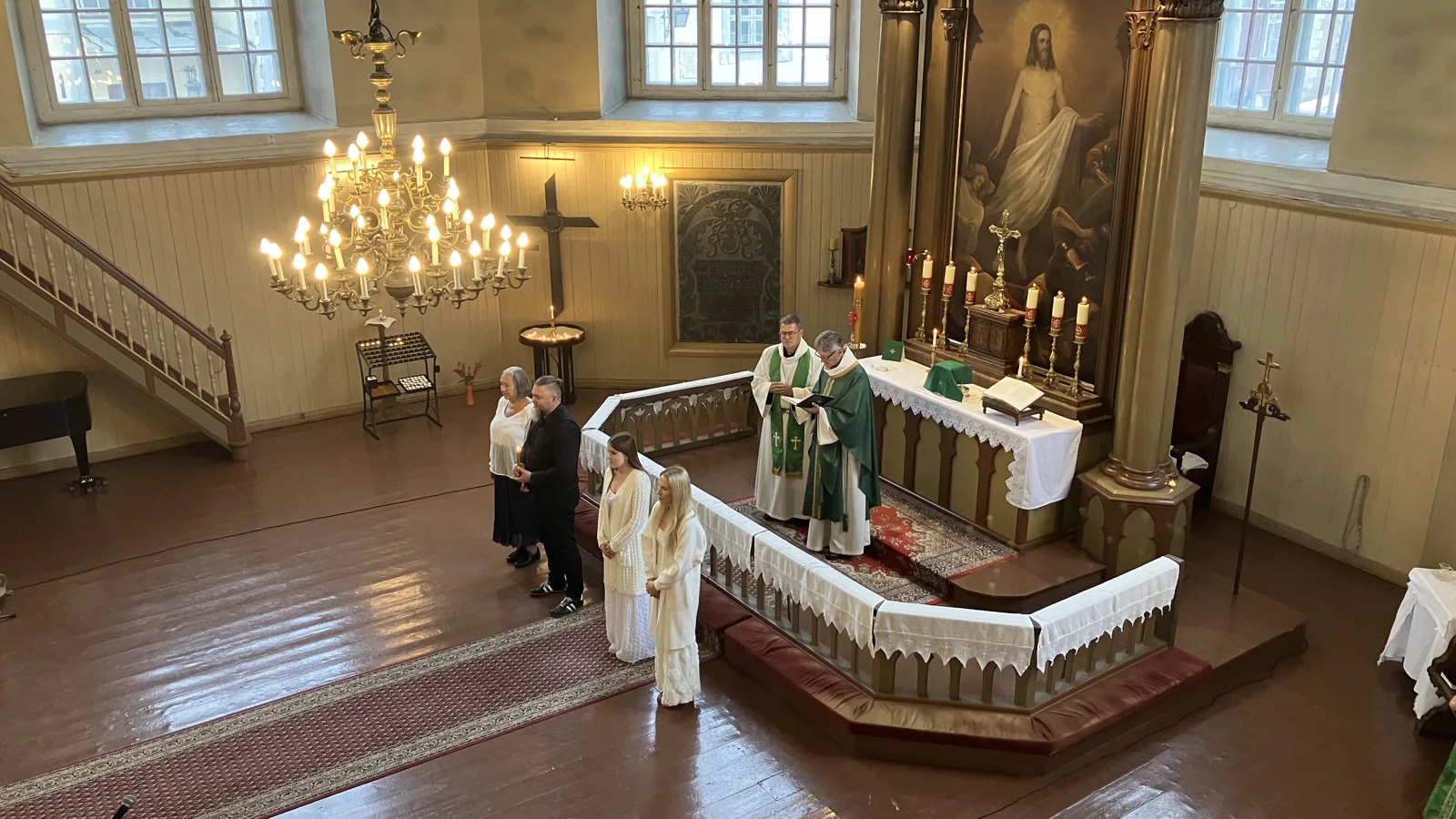
The Most Holy Sacrament of the Altar is a sacrament of the Christian life, instituted for the Church by Jesus Christ Himself. In it we receive His Body and Blood and share in the fruits of His sacrifice on the Cross: the forgiveness of sins and the promise of eternal life.
What do we receive in Holy Communion?
In Holy Communion, under the forms of bread and wine, we receive the true Body and Blood of Jesus Christ. This is the same Body given up to death and the same Blood shed for us on Calvary.
Is the Most Holy Sacrament of the Altar truly necessary?
Yes, for it is the Most Holy Sacrament of the Altar that sustains the Christian in spiritual life. It is written:
“The Sacrament has been instituted for us as a daily pasture and sustenance, so that our faith may refresh and strengthen itself and not weaken in the struggle.”
How often should we receive Holy Communion?
A Christian should receive Holy Communion at least once a year, but it is good to come as often as possible. To hear the invitation and knowingly reject it separates us from the fellowship of the Church. The gravest discipline for a Christian is to be barred from Holy Communion for a time; this is known as excommunication.
How should we prepare to receive Holy Communion?
We prepare through prayer and by deepening our faith. It is good to seek reconciliation with those with whom we are in conflict or whom we have treated unjustly. When a grave sin, guilt or another burden weighs upon the conscience, one should first make confession. Martin Luther writes: “Fasting and bodily preparation are certainly fine outward training.
But that person is truly worthy and well prepared who has faith in these words: ‘Given for you’ and ‘shed for you for the forgiveness of sins.’ But anyone who does not believe these words or doubts them is unworthy and unprepared, for the words ‘for you’ require truly believing hearts.”
Who receives the Most Holy Sacrament of the Altar to their judgement?
The Sacrament may be received for salvation or for judgement. It is received to judgement by sinners who refuse to repent, by those who spread false teaching and by unbelievers. The Apostle Paul writes: “Whoever, therefore, eats the bread or drinks the cup of the Lord in an unworthy manner will be answerable for the body and blood of the Lord.
Examine yourselves, and only then eat of the bread and drink of the cup. For all who eat and drink without discerning the body eat and drink judgement against themselves.” (1 Corinthians 11:27–29)
When should a pastor be asked to bring Holy Communion to the home?
If a Christian is unable to attend church for a prolonged period, a pastor should be invited to the home. It is advisable to receive Holy Communion in this way at least a few times a year, especially for older people. When death may be near, a pastor should always be called to the home or hospital to administer Holy Communion.
Everyone has the right to die with dignity; for a Christian this includes the opportunity to receive confession, Holy Communion and, where appropriate, the anointing of the sick (James 5:14ff.).
Further reading
- Anonymous: Journey to the Source, reflection 4: The Sacraments – Holy Communion (in Estonian)