Contents
Patron saints of Pärnu St Elizabeth’s Parish
Pärnu St Elizabeth’s Parish honours three people of great importance in the history of the Church as its patrons: St Elizabeth of Hungary (or Thuringia), St John the Apostle and Evangelist, and St Nicholas of Myra.
The first is directly connected with the name of our church and parish. St John was the patron of the Estonian parish in Pärnu before St Elizabeth’s Church was built, while St Nicholas was the patron of Pärnu’s historic German parish. The present parish is the legal successor both of the former St John’s Parish and of St Nicholas’s Parish, which was united with it in 1944. We therefore hold all three saints in special honour.
St Elizabeth

St Elizabeth was born in Hungary in 1207, the daughter of King Andrew II and Queen Gertrude. At the age of four she was taken to the Wartburg in Thuringia and raised by Landgravine Sophie, mother of her future husband.
At fourteen Elizabeth married Landgrave Louis IV of Thuringia. Their happy marriage, which produced three children, lasted barely six years: Louis died during a crusade in 1227. Widowed at only nineteen, Elizabeth thereafter regarded herself as dead to the world and the world as dead to her.
Her deep love for Christ drew her to simplicity, poverty and service of the poor. The message of St Francis of Assisi—serving Christ in those who suffer—found a strong response in her heart.
Misunderstood at the Wartburg, Elizabeth left and lived in Franciscan poverty and simplicity. In 1229 she founded a hospital in Marburg for the sick and destitute and dedicated it to St Francis. Besides directing the hospital, she herself performed the tasks no one else wished to do.
Elizabeth died after a short illness during the night of 16–17 November 1231 and was canonised on Pentecost, 27 May 1235.
She is especially honoured as patron of Thuringia and Hesse, widows and orphans, beggars, the sick, the unjustly persecuted and all in need, as well as nurses and carers. Her feast is kept on 17 November, or according to the older calendar on 19 November.
St John
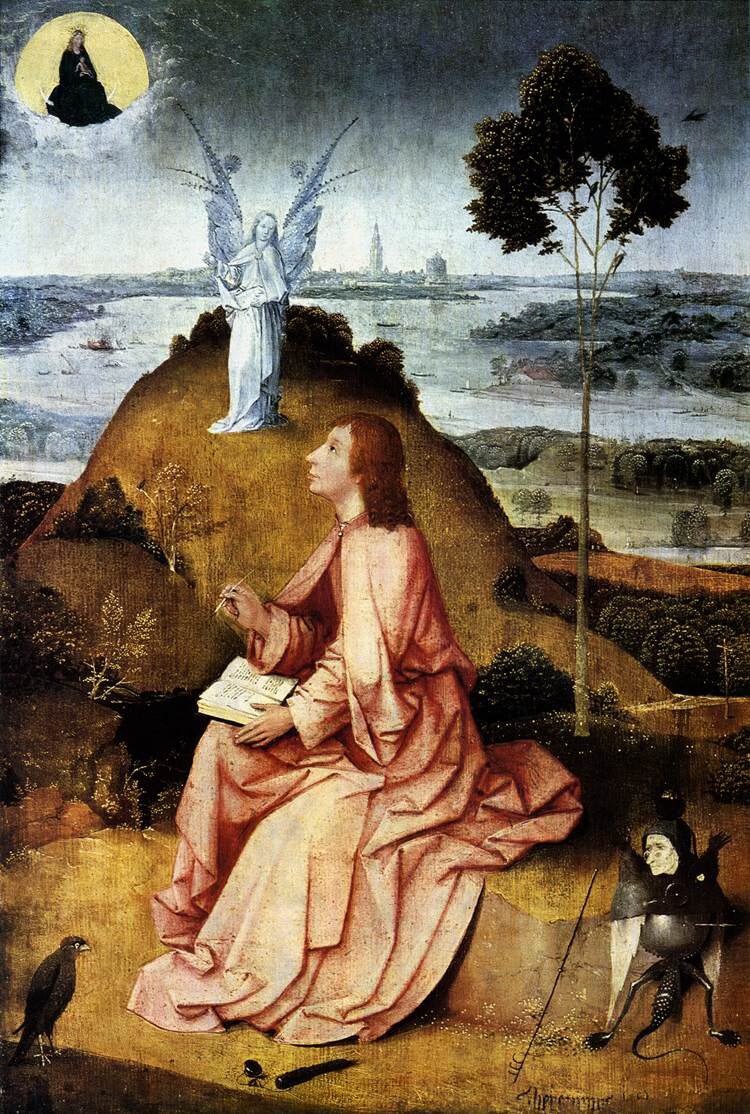
St John the Apostle and Evangelist, together with his brother St James the Greater, came from Bethsaida in Galilee. Their father Zebedee was a fisherman, and his sons followed the same trade.
John was among the first disciples called by Jesus. Along with St Andrew he had previously been a disciple of John the Baptist.
Jesus showed John particular trust and love, probably because of his deep devotion and faithfulness. The Gospels also reveal his forceful temperament: Jesus called John and James “sons of thunder”.
Several books of the New Testament are traditionally attributed to John: the Gospel, three letters and Revelation, the last written while he was exiled on Patmos.
John died at Ephesus, probably around the year 101, at a very advanced age. His final, constantly repeated exhortation was: “Little children, love one another!”
He is patron of sculptors, painters, printers, bookbinders, booksellers, writers, theologians and many craftspeople. His intercession is sought in dangers including hail, poisoning and burns, and in illnesses such as leprosy. His feast is celebrated on 27 December.
St Nicholas
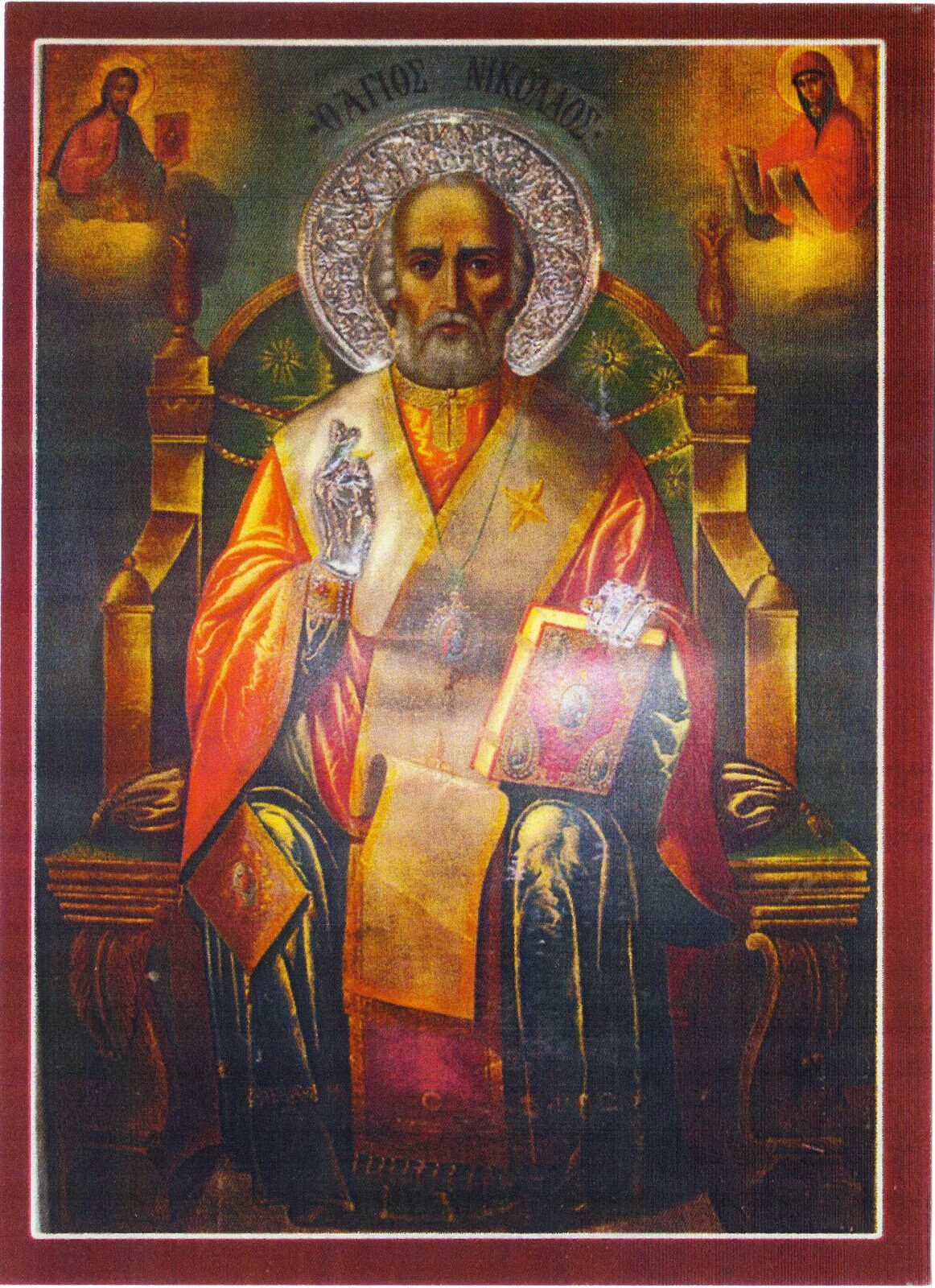
St Nicholas of Myra was born at Patara between 280 and 286. From childhood he sought to live a devout and disciplined life, fasting every Wednesday and Friday throughout his life.
Orphaned early, Nicholas distributed his inheritance to the poor. Many stories tell how he helped people in mortal danger, including those at sea, or in extreme poverty.
While on pilgrimage, Nicholas went under the guidance of the Holy Spirit to Myra, whose bishop had recently died. Through what was understood as divine revelation, the neighbouring bishops unexpectedly chose him as Bishop of Myra. He fulfilled the calling faithfully and became an example of Christian virtue.
During the persecution ordered by Diocletian and Maximian, Nicholas was imprisoned until Constantine became emperor.
Bishop Nicholas was among the fathers of the Council of Nicaea. He firmly opposed the teaching of Arius that Christ was not truly God and took part in formulating the Nicene Creed.
Nicholas died in Myra between 345 and 351. He is patron of children, pupils, unmarried women, expectant mothers, older people, altar servers, pilgrims, sailors, merchants and many crafts and countries, including Russia. His feast is celebrated on 6 December.