Parts of the church and their spiritual and practical meaning
A church is not a museum, although it contains much that is old and precious. It is first of all the home of a living congregation: children are baptised, couples married, the departed commended to God, and the parish gathers for worship every Sunday. The word “church” means both the building and the people who gather there—the community belonging to the Lord. This house was built as a meeting place for God and humanity.
Nothing in a church is accidental. Each feature has a meaning. This page explains what you see in St Elizabeth’s Church and in Christian churches more generally.
Contents
- East and west: a church with direction
- The altar: the heart of the church
- The tabernacle: Christ’s abiding presence
- The baptismal font: the door into the Church
- The Paschal candle: the light of the Resurrection
- The pulpit: the place of God’s Word
- The organ: queen of instruments
- The bells: the voice of the town
- Chandeliers: light and memory
- Come and see
East and west: a church with direction
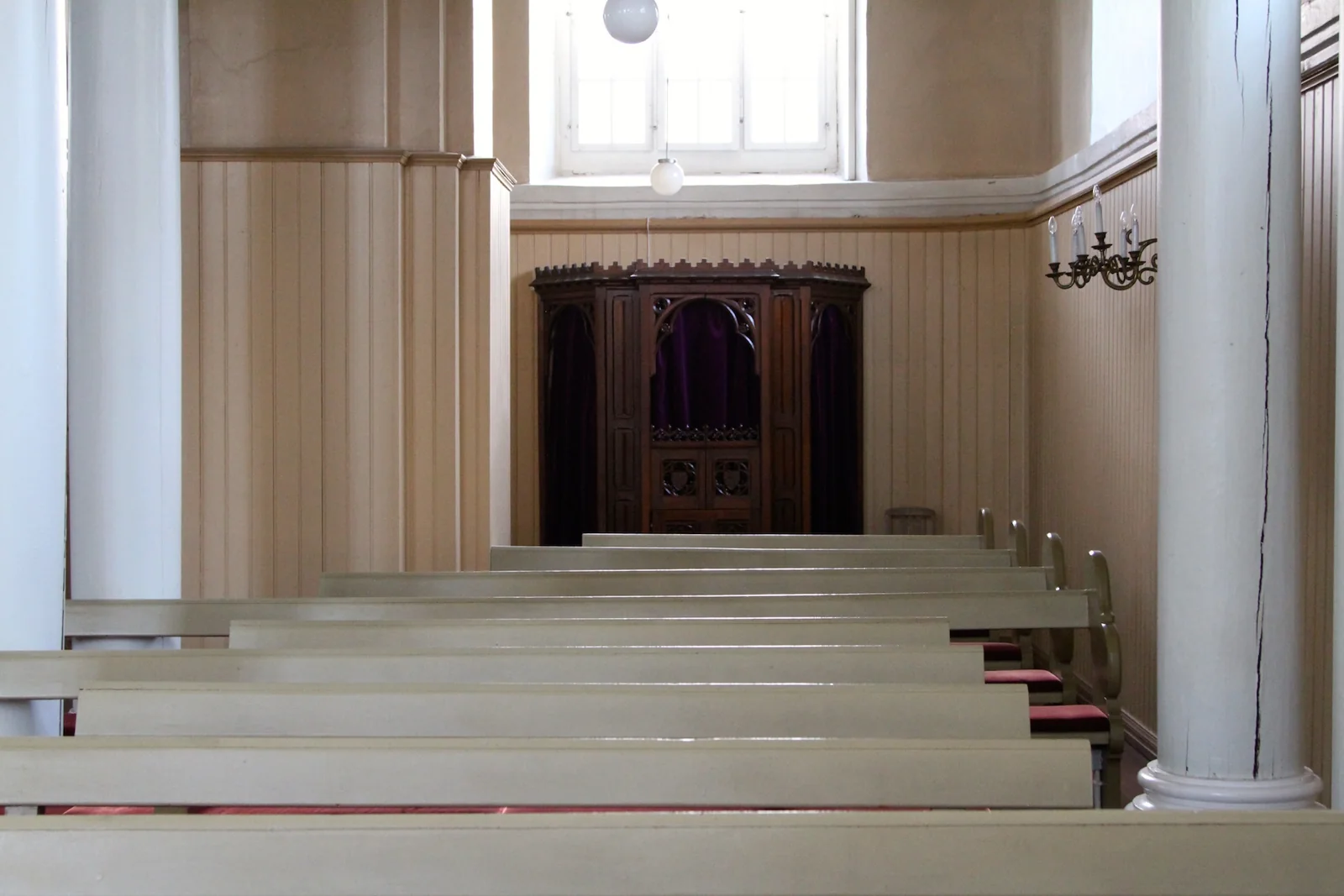
Christian churches have traditionally been aligned east–west, with the altar in the east and the main entrance in the west. St Elizabeth’s follows this ancient order. The sun rises in the east and is a symbol of Christ, the Sun of Righteousness and Light of the World, who conquered death as daylight conquers night. Early Christians prayed facing east and awaited Christ’s return like dawn from the east.
Walking from the western door towards the altar means moving from dimness towards light, an image of the journey of life and faith. The nave’s name is related to the Latin navis, “ship”: the Church has long been compared to a vessel carrying its people across the sea of life. St Elizabeth’s present plan is cruciform; the transept completed in 1893 gives it the shape of the cross, the central sign of reconciliation between God and humanity.
The altar: the heart of the church
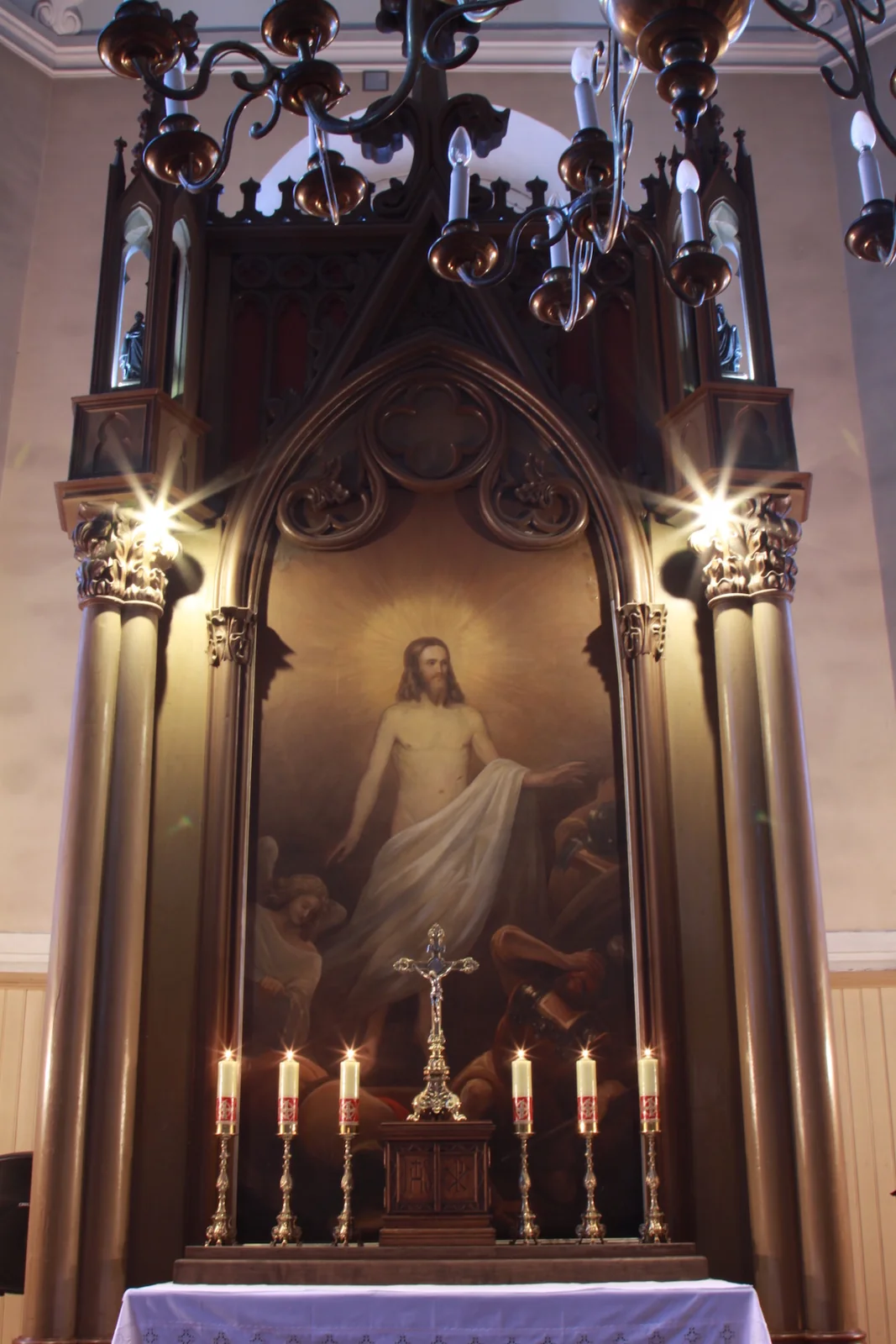
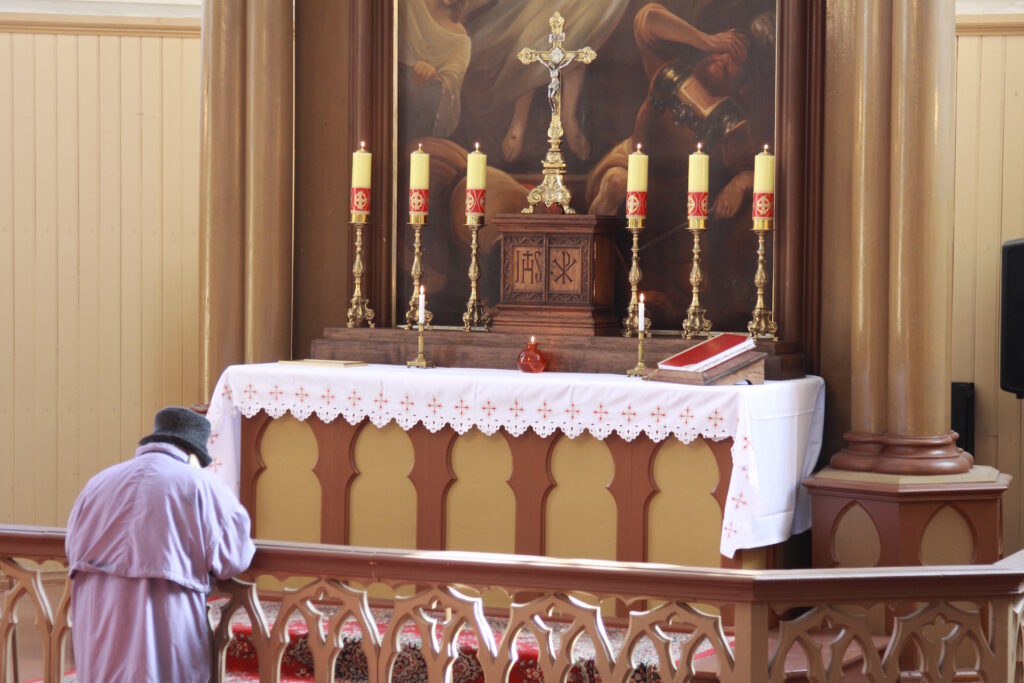
The altar is the Lord’s table, around which the congregation gathers for Holy Communion as a family gathers around its table. Jesus instituted the sacrament at the Last Supper, taking bread and wine and saying: “This is my body … this is my blood … do this in remembrance of me.” In the consecrated bread and wine Christ’s Body and Blood are truly present. Those who receive are joined both to Christ’s saving sacrifice and to one another as one people of God.
The altar was given in 1850 by Reinhold Stael von Holstein, lord of Uulu and Surju manors. The altarpiece The Resurrection was painted in 1854 in Van der Kaat’s workshop in Rotterdam. The first pastor, Wilhelm Gabriel Wagner, died in 1757 and was buried beneath the altar. During later rebuilding his gravestone was placed in the wall to the right of the altar.
The tabernacle: Christ’s abiding presence
The tabernacle is a small locked cabinet holding consecrated bread remaining after Holy Communion. Its name means “tent” and recalls the Old Testament tabernacle in which God dwelt among Israel.
The consecrated gifts are reserved because Christ remains truly present in them after the service. They can be taken to the sick and dying or distributed at a later service. A red sanctuary lamp normally burns nearby as a sign of Christ’s presence. Bowing or genuflecting before the altar is therefore reverence not towards furniture but towards Christ present in the sacrament.
Tabernacles are less common in Lutheran than in Roman Catholic churches, but they belong to the ancient common heritage of Western Christianity, of which the Lutheran Reformation was a renewal movement.
The baptismal font: the door into the Church
The font is traditionally placed near the entrance to show that Baptism is the doorway by which a person enters not merely a building but the people of God. In Baptism water is poured three times in the name of the Father, the Son and the Holy Spirit. God washes away sin, gives new birth as his child and receives the baptised into the Church.
Infants and adults may be baptised. Parents and godparents confess the faith for a child and promise a Christian upbringing. The ancient practice of touching baptismal water and making the sign of the cross upon entering church recalls one’s own Baptism. At St Elizabeth’s the font stands in the sanctuary for practical reasons, while vessels of water are also available near the entrances.
The Paschal candle: the light of the Resurrection
The large candle beside the font is the Paschal candle. It is lit in the dark church at the Easter Vigil: one flame proclaims that Christ is risen, light has conquered darkness and life has conquered death. It bears a cross, the Greek letters Alpha and Omega—Christ is beginning and end—the current year, and often five grains of incense representing Christ’s wounds.
It burns throughout Eastertide and at Baptisms and funerals. The same resurrection light accompanies a Christian at the beginning of faith and at the end of earthly life. The baptismal candle is lit from it as a sign that the baptised receives light from Christ and is called to be light for the world.
The pulpit: the place of God’s Word
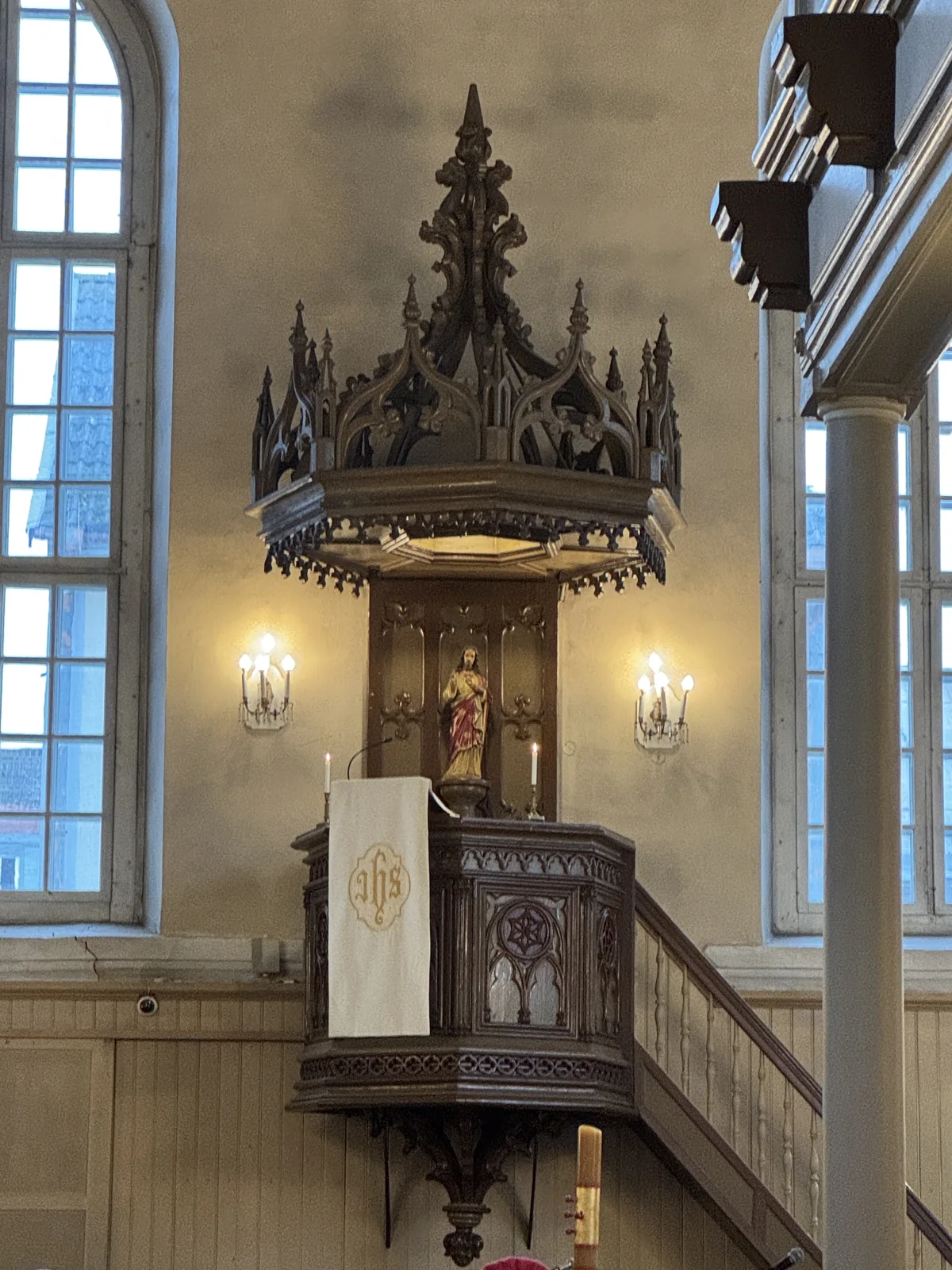
The pulpit is the raised place from which the sermon is preached. Its height originally allowed an unamplified voice to carry throughout the church, often aided by a sounding board. It also signifies that the preacher does not proclaim personal wisdom but God’s Word, which stands above us. St Elizabeth’s pulpit dates from 1850.
The changing liturgical colours also proclaim the Church’s year: white for joy and feast, red for the Holy Spirit and martyrs, violet for penitence and expectation, and green for daily spiritual growth and fruitfulness.
The organ: queen of instruments
The Lutheran Church is often called a singing Church. Luther was a passionate musician and called music God’s finest gift after theology. The congregation itself sings in worship, supported and led by the organ.
St Elizabeth’s has two organs, a rarity in Estonia, and a third in the fireplace hall of the parish house. The west-gallery organ was built in 1928 by Kolbe & Dury of Riga and thoroughly restored in 2001. It replaced the first organ, built in 1845 by Carl George Thal of Paide.
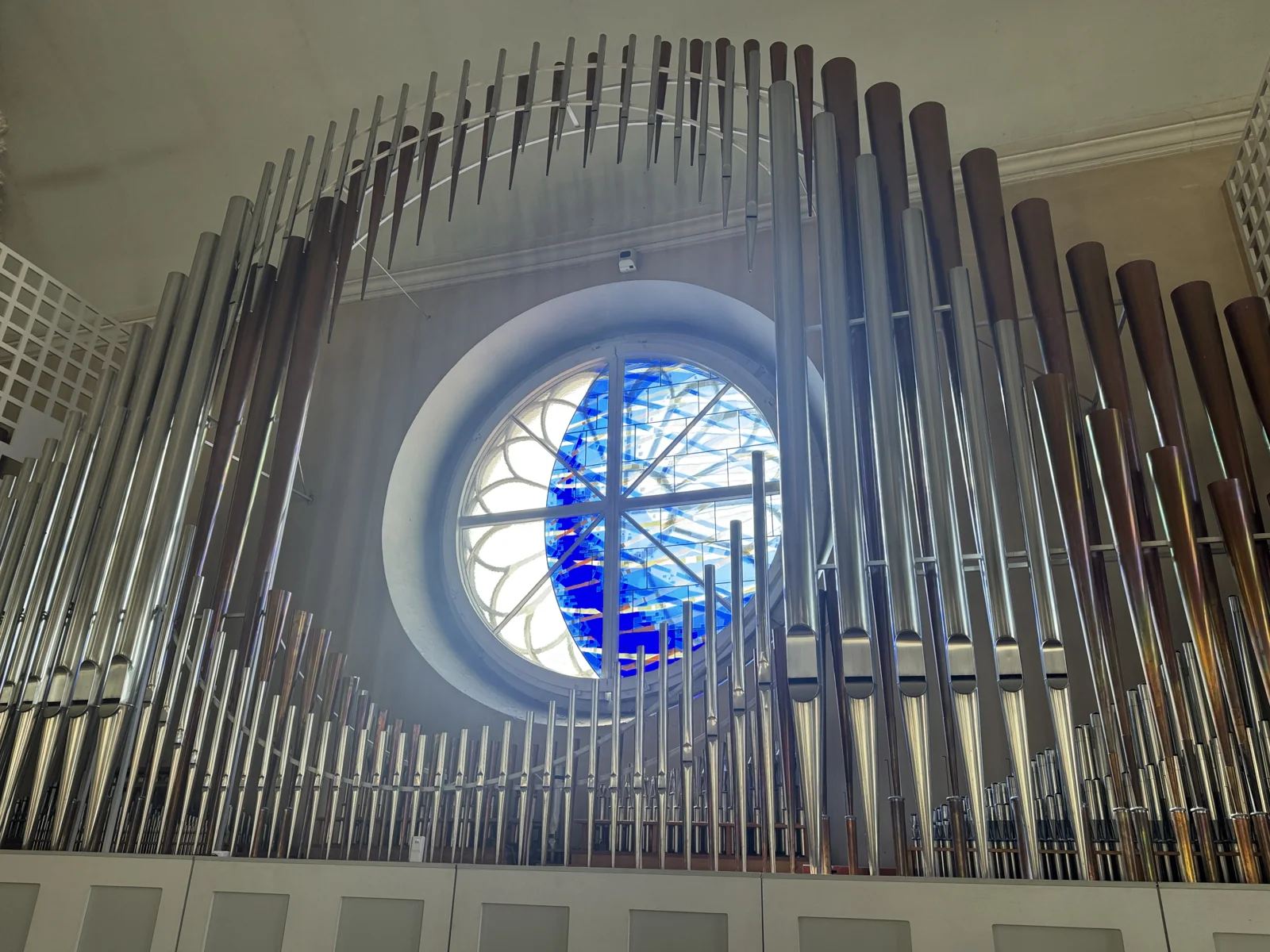
The south-transept organ was built by Hardo Kriisa and consecrated in 2010; its case was designed by Rait Prääts and incorporates the great stained-glass window of 2007. These instruments make the church a home of the Pärnu Organ Festival and many concerts.
The bells: the voice of the town
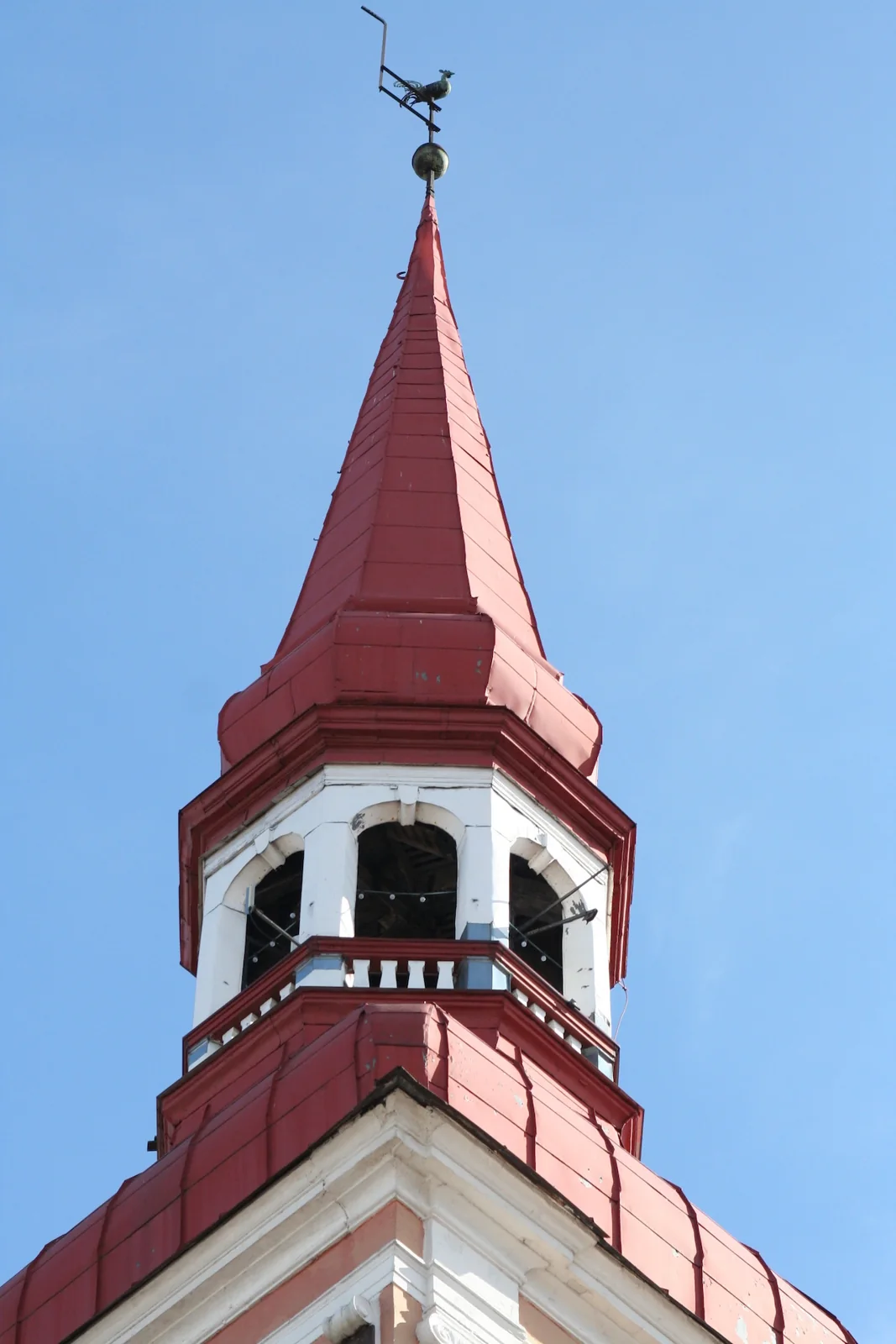
The church has two bells. The older was cast in St Petersburg in 1825; the other was recast in E. W. Peterson’s workshop in 1861. Church bells once served as the common clock and voice of town and village: calling to worship, marking time, warning of fire and war, and accompanying the dead. Their sound has been called “audible prayer”. Today they ring for worship, funerals and weddings.
The cockerel on the tower dates from 1747. It symbolises vigilance, announcing dawn and recalling Peter’s denial of Jesus before the cock crowed.
Chandeliers: light and memory
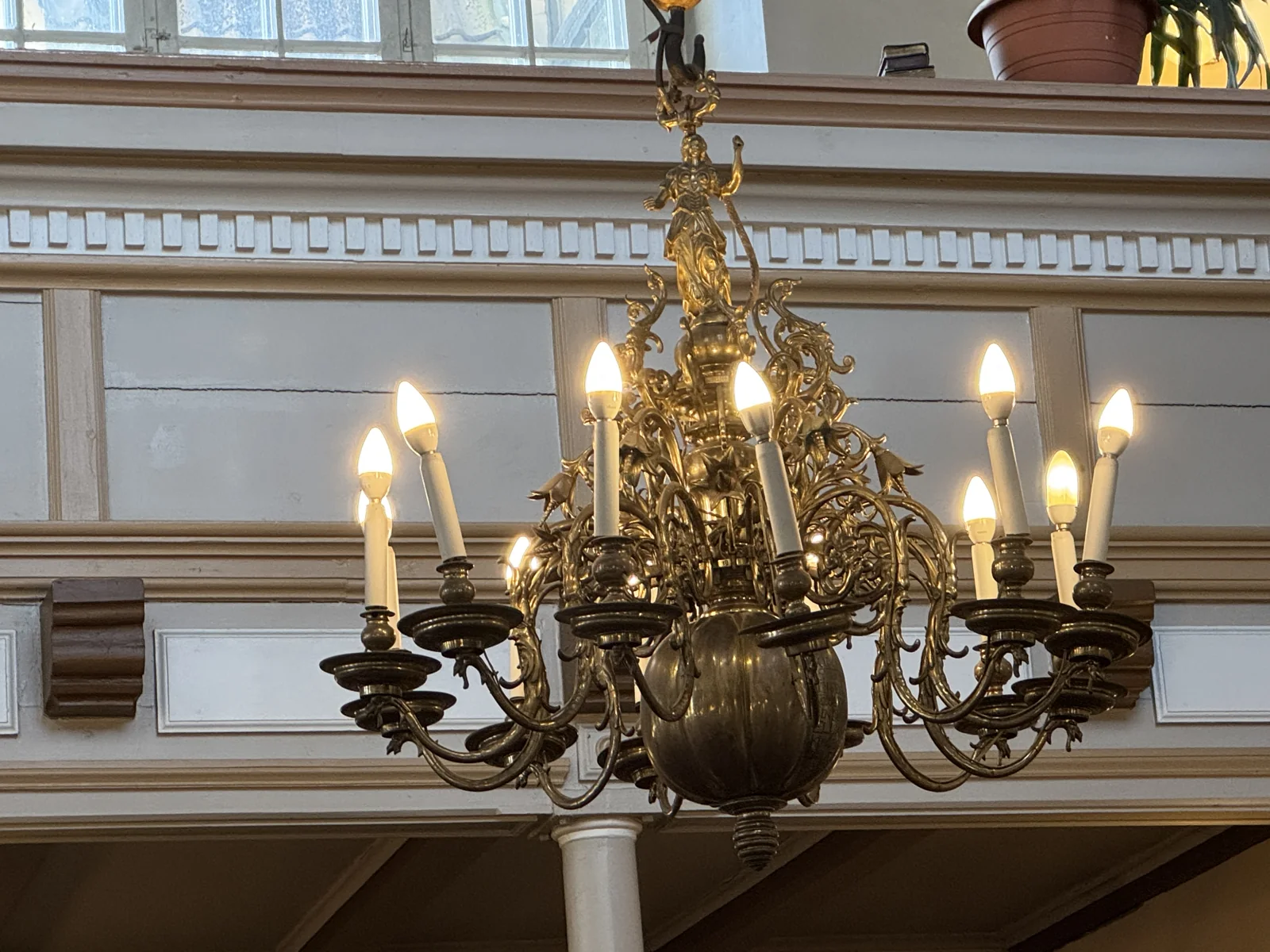
The mirror-vaulted ceiling, Ionic wooden columns, portals, windows and richly carved doors belong chiefly to the enlargement of 1893. The chandeliers are also memorial objects. One in the newer wing, dated 1674, came from the former St John’s Church; other chandeliers commemorate later generations and benefactors. Their light speaks both of Christ, the Light of the World, and of the faithful whose gifts continue to serve the congregation.
Come and see
The best way to understand a church is to enter it. You are welcome to sit quietly, pray, light a candle, attend a concert or join the congregation for worship. Holy Mass is celebrated every Sunday at 10:00 and on Wednesdays at 18:00.