Pilgrimages of the Holy Cross to Vastseliina have been organised since 2010 at the initiative of the Pärnu parish of the Roman Catholic Church in Estonia. These are ecumenical pilgrimages, and Pärnu St Elizabeth’s Parish has been actively involved as an organiser and participant from the beginning.
Conceived as a one-day retreat on wheels, the pilgrimage has taken place on the Saturday closest to the Feast of the Exaltation of the Holy Cross (14 September), and this tradition continues this year.
In addition to this year’s Holy Cross pilgrimage on 13 September, we plan to begin establishing a walking route for the pilgrimage.
We will walk the first stage of the Holy Cross pilgrimage route—from Pärnu St Elizabeth’s Church to the Chapel of the Holy Cross at Vanamõisa—from 6 to 9 August 2025. Everyone interested is welcome. Further organisational information and the registration form are available on the Facebook page “Püha Risti palverännaku jalgsirada” and on the website of the Catholic church in Pärnu.
The Holy Cross pilgrimage walking route
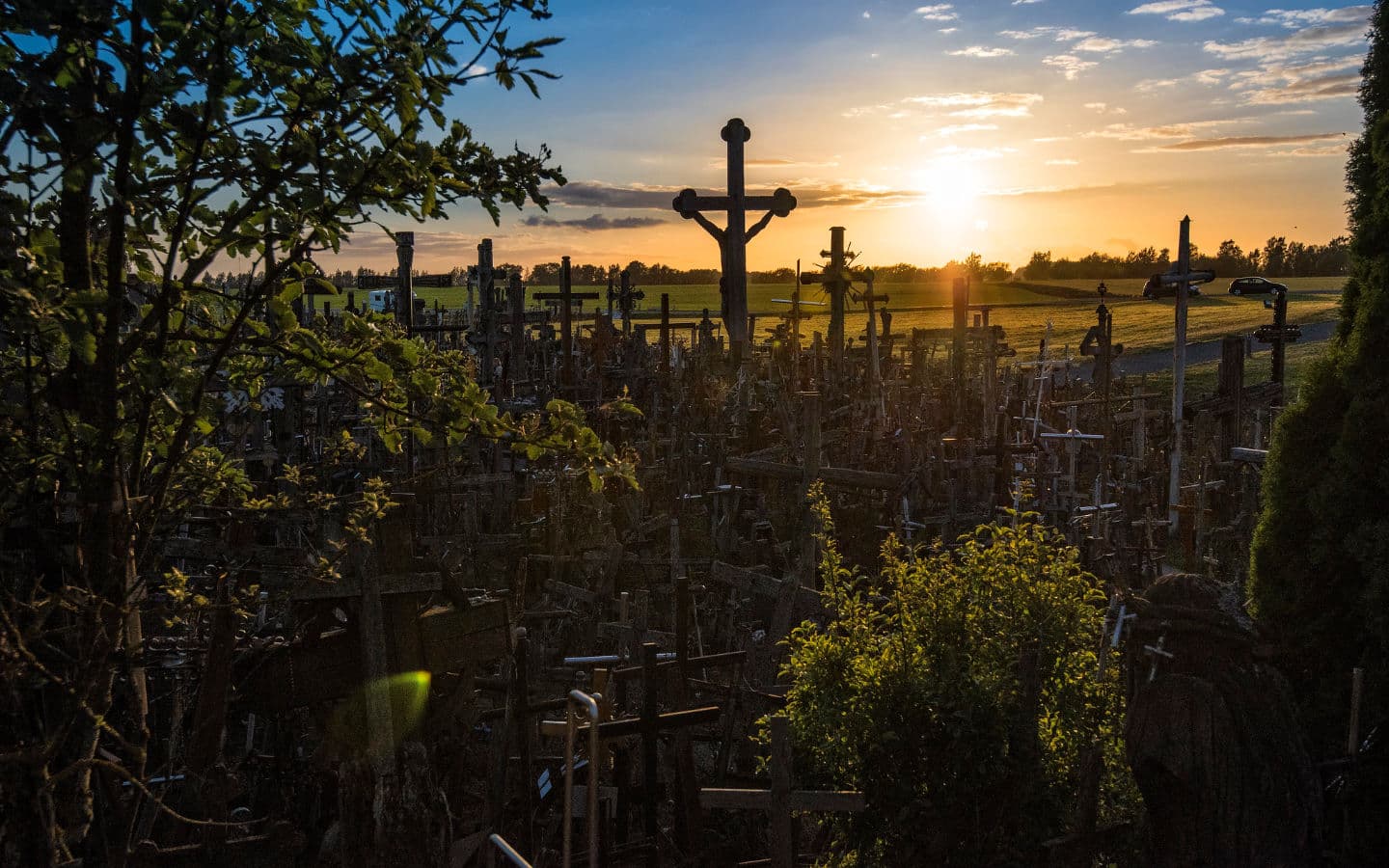
The purpose of the Holy Cross pilgrimage is to introduce the spirituality of the Middle Ages. Veneration of the Holy Cross as a symbol of Christ’s suffering, death and resurrection belongs to the whole Christian tradition. Through the pilgrimage we seek to enter into this mystery and gain some understanding of the medieval worldview.
The route passes places of devotion known since the Middle Ages, each with its own history and legends.
From the outset there has been a wish and longing to establish a pilgrimage walking route from Pärnu to Vastseliina. This year we begin marking out the route.
In 2025 we are preparing the section from Pärnu to the Chapel of the Holy Cross at Vanamõisa.
We begin by honouring the memory of the Black Cross of Pärnu—the miraculous Cross rescued by the hand of God.
In the Middle Ages the Holy Black Cross, the living wood of the Cross, was kept in the Chapel of the Holy Cross on the north side of St Nicholas’ Church in Pärnu. According to legend, it was rescued by the hand of God from the fire that destroyed Pärnu’s first cathedral in 1262. The chapel was a medieval pilgrimage destination. Country people gathered there during Lent, especially in Holy Week and on Good Friday, travelling from as far as 150 kilometres and beyond. In 1524, while listing the church’s income, Johann van Lynthem, a councillor of New Pärnu, wrote: “…in addition, there is a wooden cross in the chapel, at which the country people find a great (or Heavenly) refuge and gate…”
The enduring power of this medieval relic is shown by the fact that no modern government has wished to remove its image from either the coat of arms or the flag of Pärnu. Only the colour of the cross has changed: to gold under Swedish rule and to silver under the Russian Empire.
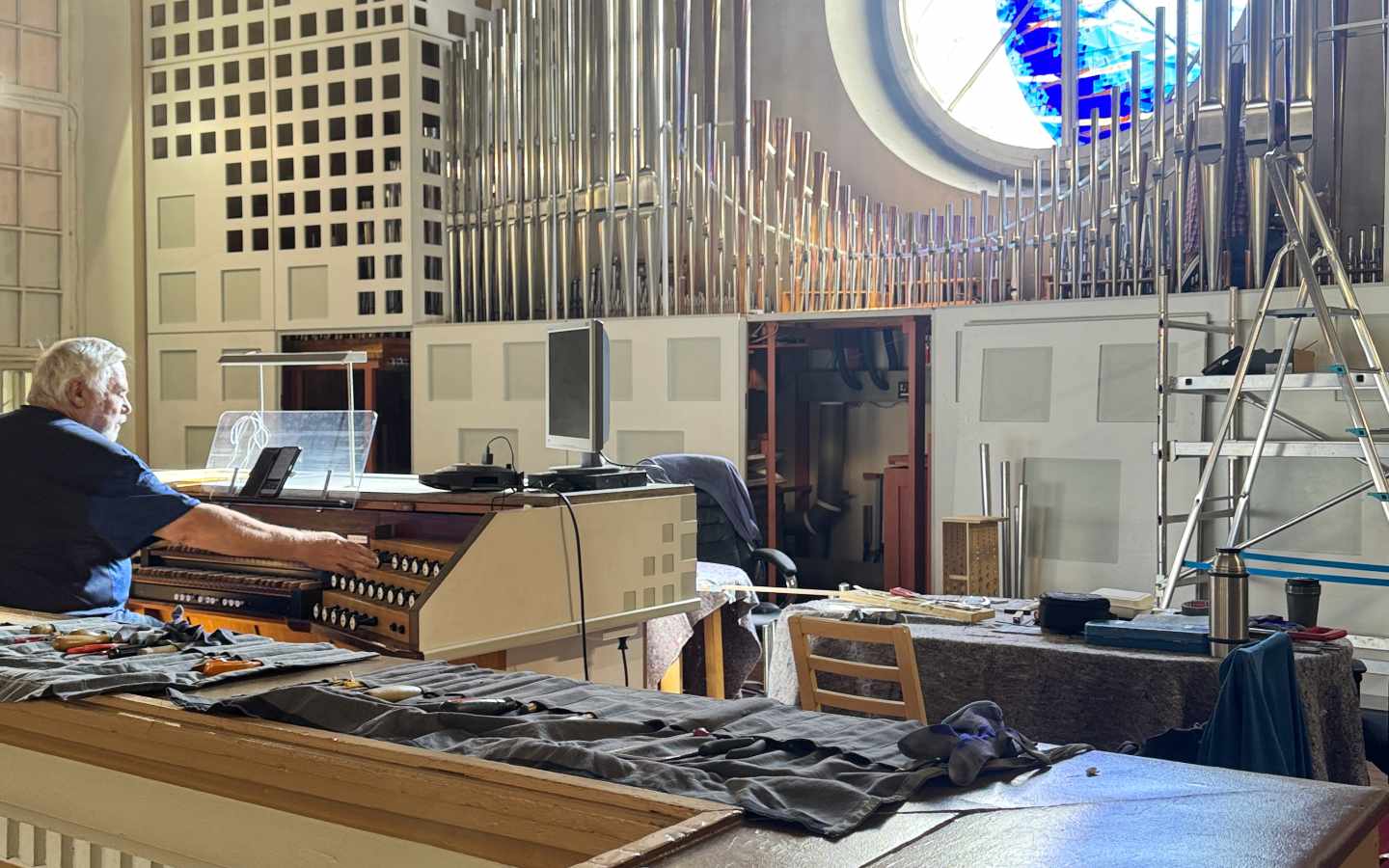
Today, a copy of the historic Black Cross, reconsecrated in 2001, is kept in Pärnu St Elizabeth’s Church.
On the fourth day, after travelling through Soomaa, we reach the Chapel of the Holy Cross in the village of Vanamõisa. A record of a visitation conducted by the Polish authorities in 1599 reports that Mass was celebrated every year on the Feast of the Finding of the Cross at the chapel, situated about halfway between Suure-Jaani and Viljandi, and that very large numbers of people gathered there. The stone building, described as a small church, had belonged to Viljandi Castle from ancient times. According to A. W. Hupel, the nocturnal devotions observed by the peasants continued into the 1770s. Accounts say that crowds, sometimes numbering several thousand, lit a fire at night within the chapel walls and cast thread, flax, wool, bread, money and other offerings into it. Hupel initially regarded the former church as a pagan sanctuary preserved from pre-Christian times. Later, however, he recorded the view of the local pastor, von Dehn: judging by its architecture, it was a church built in the Catholic era and visited because of a sacred image kept there. At the end of the eighteenth century, offerings at the site were still so numerous that the local pastor and the Viljandi district magistrate had the walls demolished. Both men died soon afterwards, which the people interpreted as punishment for destroying the holy place. According to J. Jung, people gathered at the Church of the Cross on the evening of 2 May. Pilgrimages to the Vanamõisa Church of the Cross continued longer than at any other place in Estonia.
Signe Taremaa